ChittahChattah Quickies
January 7th, 2010
- Zach Gage’s Antagonistic Books – A set of two books and instructions for how to build them. ANTAGONISTIC BOOKS turns the emotions and actions surrounding the banning of books into physical objects that undermine the user.
Danger reenacts what has historically been done to dangerous literature, self-immolating when opened.
Curiosity represents the notion that many book-banners feel, that the true danger of literature is that once you've opened a book you have been forever changed and can never go back. Emulating this notion, Curiosity can never be closed. Once opened, it is locked in an open position forever.
(via Waxy)
- Netflix agrees to delay in renting out Warner movies [latimes.com] – "This deal uniquely works for Netflix because our subscribers are desensitized to street dates and more interested in being matched to the perfect movie," said Ted Sarandos, Netflix's chief content officer, who handles studio relationships. "Some subscribers will so passionately want to see it in the first 28 days they may go out and buy it, just as some people want to see 'Avatar' so badly they pay to watch it in 3-D." [Snort! Guffaw!]
- Book Industry Study Group – BISG is the leading U.S. book trade association for supply chain standards, research, and best practices. For over 30 years, BISG has been working on behalf of its diverse membership of publishers, retailers, manufacturers, distributors, wholesalers, librarians and others involved in both print and digital publishing to create a more informed, empowered and efficient book industry supply chain for both physical and digital products.
In seeking support from and representing every sector of the book industry, BISG affirms its belief in the interdependence of all industry segments. BISG understands that success in business is often easier to achieve through joint effort and that common problems are best solved together.
- How to create new reading experiences profitably [booksahead.com] – Books have served well as containers for moving textual and visual information between places and across generations. [digita] books need to be conceived with an eye on the interactions that text/content will inspire. Those interactions happen between the author and work, the reader and the work, the author and reader, among readers and between the work and various services, none of which exist today in e-books, that connect works to one another and readers in the community of one book with those in other book-worlds….Publishing is only one of many industries battling the complex strategic challenge of just-in-time composition of information or products for delivery to an empowered individual customer. This isn’t to say that it is any harder, nor any easier, to be a publisher today compared to say, a consumer electronics manufacturer or auto maker, only that the discipline to recognize what creates wonderful engaging experience is growing more important by the day.
- New York, 2009 [Flickr] – My photos from my recent trip to New York City. Art, street art, strange signs, people watching, and other observations. Check it out!
Tags:
antagonistic, art, artifacts, banning, books, censorship, consumer, customer, design, distribution, emotions, experience, fail, film, fire, ideas, industry, justification, lock, money, netflix, noticing, NYC, observation, photography, photos, publishing, rationalization, reading, reading ahead, statement
ChittahChattah Quickies
December 24th, 2009
Tags:
archaeology, authenticity, auto, automobile, automotive, books, bookstore, cars, community, crowdsourcing, customers, debate, design, eBook, edison, eReader, ethnography, fake, future, gm, history, iceberg, ideas, innovation, input, insights, iphone, itunes, library, marketing, norman, observation, reading, reading ahead, research, shoplifting, stealing, store, theft, titles
Portigal Consulting year in review, 2009
December 22nd, 2009
It’s been a busy year and as we head into the home stretch, looking forward to 2010 (supposedly the year we make contact), we wanted to take a look back at the past 12 months and call out some of the highlights.
- Our blog, All This ChittahChattah, turned 8
- We conducted our own study (Reading Ahead) about the future of the book and digital reading, blogged at length about our process, posted an in-depth narrated presentation of findings and opportunities, tracked the cultural progression of the digital books issue, presented at the UC Berkeley Digital Futures speaker series (and subsequently at Blurb), conducted a design contest with Core77, and selected a handful of exciting winners
- We helped to launch REACH, a global network of small “design research” consultancies that can better serve clients across multiple markets
- We found good (or at least interesting) design exemplars in/at/from/by information-rich street signs, David Lee Roth and Runnin’ With the Devil, sour cream, NPR, the Forestry Service, real-life interfaces (and again), a farmer’s market, and a drink menu
- We were disappointed by user experiences that fell short, from AT&T, Yahoo!, car dashboards, and Land’s End
- We noticed workarounds for hotel rooms, parking lots, shopping carts, input devices, and loud guns
- We found some curious branding, storytelling, and other customer-facing strategies by Starbucks, M&Ms, Papa Murphy’s, parking garages, The Griddle Cafe, a range of business names (and again), the Santa Barbara Zoo, Verizon’s Hub, YouTube, municipal garbage, Old Navy, Columbus Foods after a devastating fire, KISS (and again), and Jewish delis
- We revisited themes, findings, or product launches from previous projects about IT professionals, safety gear, digital cameras, mobile telephones and saw our client MediaMaster shut down their service
- We bemoaned bad approaches to product development with personas (and again), surveys, and a shallow view of user-centeredness
- We continued to explore where, when, why, and how to use customer information in product development, including a provocative article by Don Norman, and a thoughtful piece by Robert Fabricant
- We found surprise and amusement in gendered home territories, grocery stores, pillows that preserve the shape of a baby’s head, retailing dead formats, license plates, and grassroots product development
- In the face of tremendous growth for Twitter, we considered some of the barriers to adoption as well as the opportunities still to be addressed
- Steve was invited backstage to designer-vibrator-purveyor JimmyJane and found their brand not fulfilling its cultural change (and world domination) business opportunity, a perspective later taken up by the New York Times
- We posited how the electric car industry can create a better story around their optimal use cases
- Steve led his workshop “Well, We’ve Done All This Research…Now What?” for sold-out groups at Interaction|09 and EPIC, as well as abbreviated versions at IxDA-SF, BayCHI (slides and audio here), Web 2.0, and Nokia
- Steve spoke to students from Pratt, SVA, Istanbul Technical University, and CCA’s Design MBA Innovation Studio
- Steve spoke about user research, design and innovation to the MEDEA Collaborative Media Initiative, the Istanbul Industrial Design Summit; about culture to the Chicago IxDA, the Amsterdam UX Cocktail Hour, and HFI; and about improv and creativity at the IDSA and the IxDA-NYC (see slides here and video
here) - Steve gave a webinar about Creating Authentic Product Experiences to the University of Oregon’s Contemporary Design class; we’re looking for future opportunities to give this webinar and even put together a trailer
- World travels lead to a comparison of election posters as well an an examination of toilet paper sizes
- Steve took pictures in Vancouver, LA, Santa Barbara, Amsterdam (some highlights here, here, here, here, and here), Belgium (some highlights here), Miami, London (highlights here), Istanbul (highlights here), and New York
- All This ChittahChattah is now on Twitter and portigal.com is available in a mobile version
- Steve’s chapter, Listen, Do You Want To Know A Secret? was published in here) for Photo Reporter Magazine, Let’s Embrace Open-Mindedness for Johnny Holland, The Cultures of Design for DMI Connect, Organizational Empathy, from Top to Bottom for Appliance Magazine, and on video, offered some quick advice to aspiring designers
- Steve was quoted in the San Francisco Chronicle, in an article about the adoption of e-book readers (thoughts, from the cutting-room floor, here)
- Steve contributed to William Lidwell and Gerry Manacsa’s book Deconstructing Product Design
- Steve published a second year of True Tales columns for interactions: Poets, Priests, and Politicians, Interacting With Advertising, Ships in the Night (Part I): Design Without Research?, Ships in the Night (Part II): Research Without Design?, We Are Living in a Sci-Fi World, and On Authenticity
Previously: Our 2008 review
Tags:
all this chittahchattah, blogging, brand, conference, design, innovation, insights, lecturing, noticing, observation, patterns, portigal consulting, speaking, storytelling, teaching, themes, travel, user experience, year
Observing Istanbul, 2009
December 20th, 2009
Tags:
animal, art, cat, fishing, hospital, interactive, istanbul, kumpir, mosque, museum, obelisk, observation, photos, pizza hut, sign, spices, stray, sumit, turkey, wc
Observing London, 2009
November 30th, 2009
Tags:
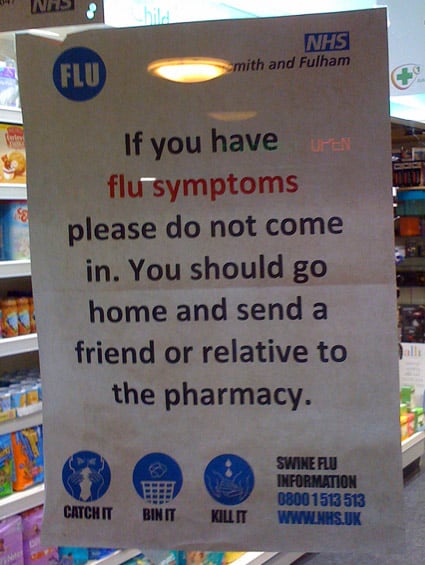
autophagia, brick lane, c3p0, cheese, chicken, crumpet, crumpetmobile, food, fruit, graffiti, h1n1, harrod's, icon, london, manners, McDonalds, mind the gap, mutate britian, observation, paddington, parmesan, presentation, sign, signs, threepio, tube, UK, underground, warning
ChittahChattah Quickies
November 27th, 2009
- Waldo Hunt, 88, dies; repopularized pop-up books in 1960s – "He was such an important publisher of pop-up books who really advanced them technically. The pop-up designers who worked for him were amazing creative engineers," said Cynthia Burlingham, director of the Grunwald Center for the Graphic Arts at the Hammer Museum of UCLA.
The first golden age of movable books began in the late 1800s, when European publishers crafted elaborate books for children, and ended with the onset of World War I. With Mr. Hunt's epiphany, the second golden age was about to begin.
"I knew I'd found the magic key," Mr. Hunt said. "No one was doing pop-ups in this country. No one could afford to make them here. They had to be done by hand, and labor was too expensive."
He started Graphics International, and produced a series of pop-up ads featuring zoo scenes as part of a magazine campaign for Wrigley's gum. Soon, his company was creating pop-up table decorations and greeting cards for Hallmark.
- Electronic Popable Books from MIT – Electronic popables integrate paper-based electronic sensors that allow amazing interactivity — turning on lights and moving images at the touch of a finger. Will it catch on or will the line between printing on paper and electronic media become so blurred that consumers will opt to watch the story on a screen?
- StoryCorps: National Day of Listening – On the day after Thanksgiving, set aside one hour to record a conversation with someone important to you. You can interview anyone you choose: an older relative, a friend, a teacher, or someone from the neighborhood.
You can preserve the interview using recording equipment readily available in most homes, such as cell phones, tape recorders, computers, or even pen and paper. Our free Do-It-Yourself Instruction Guide is easy to use and will prepare you and your interview partner to record a memorable conversation, no matter which recording method you choose.
Make a yearly tradition of listening to and preserving a loved one’s story. The stories you collect will become treasured keepsakes that grow more valuable with each passing generation.
(via BoingBoing)
- London 2009 – a set on Flickr – My London pictures from our recent visit
- Every year, The Harris Poll asks a cross-section of adults whether they think about 20 leading industries do a good or a bad job of serving their consumers. – Note that the cable industry regularly appears on this poll as doing a bad job.
- Time Warner insincerely and manipulatively asks customers to "vote" if it should "get tough" or "roll over" – Facing expiring deals with a number of key programmers, the nation's second-largest cable operator is launching a Web site, rolloverorgettough.com, which it says is designed to give its subscribers a voice in what it calls unfair price demands by content suppliers. Time Warner says those who operate broadcast and cable networks are asking for "incredible price hikes," as much as 300%. Customers will be able to vote on whether the operator rolls over, or should get tough, about price increases.
"You're our customers, so help us decide what to do. We're just one company, but there are millions of you. Together, we just might be able to make a difference in what America pays for its favorite entertainment."
Tags:
advertising, audio, books, cable, culture, design, digital, education, electronic, emotion, engagement, harris, history, industry, insincere, interview, interviewing, listening, london, manipulative, memories, MIT, noticing, obituary, observation, papercraft, photography, photos, poll, popable, popup, PR, reading, reading ahead, relationship, reputation, stories, storycorps, storytelling, travel, UK
ChittahChattah Quickies
October 25th, 2009
- Drowning in Data in Kathmandu – Exchange between me and Dave Robertson about how to process the overwhelming amount of experiential and visual stimulation that comes from spending time someplace very foreign.
- Obituary: Ray Browne / Scholar who pioneered the study of popular culture – Ray Browne, an Ohio university professor who was credited with coining the phrase "popular culture" and pioneering the study of things such as bumper stickers and cartoons, has died. He was 87.
He developed the first academic department devoted to studying what he called the "people's culture" at Bowling Green in 1973.
"Culture is everything from the food we've always eaten to the clothes we've always worn," he said in a 2003 interview.
- Disney offers refunds for Baby Einstein DVDs – Canadian and U.S. parents who feel duped by claims that Baby Einstein videos were brain boosters for their infants and toddlers can now get a refund for old merchandise from the Walt Disney Company.
The company agreed after a lengthy campaign by a coalition of educators and parents, who complained Disney's marketing materials implied their videos for babies under 2 years of age were beneficial for cognitive development.
The move to compensate some customers comes after Disney's Baby Einstein stopped using some claims following a complaint lodged with the U.S. Federal Trade Commission by the Campaign for a Commercial-Free Childhood.
The group alleged deceptive marketing.
"Disney took the word 'educational' off of its website and its marketing, but we felt that parents deserved more," child psychologist Susan Linn, co-founder of the organization, said yesterday.
Tags:
baby, babysitter, bgsu, brand, browne, children, claim, culture, data, development, disney, education, einstein, experience, film, Kathmandu, marketing, noticing, obituary, observation, ohio, parenting, pop, popular, populism, promise, screen, technology, travel, video
ChittahChattah Quickies
September 12th, 2009
- Japanese cultural norms – asking about weight – Insightful little culture-clash story; an American working in Japan isn't sure how to deal with blunt (especially from the Japanese!) questions about his increasing weight
- Clive Thomson on Bruce Bueno de Mesquita, renowned for his use of mathematical game theory models for prediction – Those who have watched Bueno de Mesquita in action call him an extremely astute observer of people. He needs to be: when conducting his fact-gathering interviews, he must detect when the experts know what they’re talking about and when they don’t. “His ability to pick up on body language, to pick up on vocal intonation, to remember what people said and challenge them in nonthreatening ways — he’s a master at it,” says Rose McDermott, a political-science professor at Brown who has watched Bueno de Mesquita conduct interviews. She says she thinks his emotional intelligence, along with his ability to listen, is his true gift, not his mathematical smarts. “The thing is, he doesn’t think that’s his gift,” McDermott says. “He thinks it’s the model. I think the model is, I’m sure, brilliant. But lots of other people are good at math. His gift is in interviewing. I’ve said that flat out to him, and he’s said, ‘Well, anyone can do interviews.’ But they can’t.”
- New York Times Magazine on the Beatles’ Rock Band videogame – This is a fantastic article that spans many big issues: gaming, music, performance, art, history, culture, product development, authenticity, creativity, entertainment, technology. It's a must-read.
- Brian Dettmer turns books into sculptural pieces – Contemporary visual artists see opportunity in what many bemoan as the twilight of the age of the book. John Latham (1921-2006), Hubertus Gojowczyk, Doug Beube and others have treated books as sculptural stuff. But no one whose work I have seen tops that of Atlanta artist Brian Dettmer at Toomey Tourell.
Tags:
american, art, authenticity, beatles, body, books, creativity, culture, data, design, entertainment, gaming, history, image, insights, interviewing, japan, listening, meaning, music, norms, observation, performance, polite, reading ahead, rude, self, technology, videogame, weight
ChittahChattah Quickies
September 6th, 2009
- Seen Reading – a "literary voyeruism blog" set mostly (I believe) in Toronto – What is Seen Reading?
1. I see you reading.
2. I remember what page you’re on in the book.
3. I head to the bookstore, and make a note of the text.
4. I let my imagination rip.
5. Readers become celebrities.
6. People get giddy and buy more books.
Why do you do this?
Readers are cool. Authors work hard. Publishers take chances. And you all deserve to be seen!
(Thanks Suzanne Long!)
- Choose What You Read NY – Choose What You Read NY is a non profit organization that offers free books to New Yorkers, encouraging its residents to read more, giving them an alternative to the free papers that get tossed out and even the digi-trash that crowds our time. In doing so, we help to recycle used books that would have unfortunately been thrown away.
You will find us near major subway stations on the first Tuesday of each month.The idea is that once someone is finished with a book, they either drop it off in one of our conveniently located drop boxes or back to us at a station. Unlike a library, there will be no due dates, penalties, fees or registrations. We only ask that you return it once you are done so that the same book can be enjoyed by another commuter.
- What was the last book, magazine and newspaper you read on the subway? – 6000 people respond and the New York Times posts the results
- How and what people read on the New York City subways – Plenty of detailed examples of people, their books, and their travels: "Reading on the subway is a New York ritual, for the masters of the intricately folded newspaper, as well as for teenage girls thumbing through magazines, aspiring actors memorizing lines, office workers devouring self-help inspiration, immigrants newly minted — or not — taking comfort in paragraphs in a familiar tongue. These days, among the tattered covers may be the occasional Kindle, but since most trains are still devoid of Internet access and cellphone reception, the subway ride remains a rare low-tech interlude in a city of inveterate multitasking workaholics. And so, we read.
There are those whose commutes are carefully timed to the length of a Talk of the Town section of The New Yorker, those who methodically page their way through the classics, and those who always carry a second trash novel in case they unexpectedly make it to the end of the first on a glacial F train."
(thanks Avi and Anne)
- Lego grabs ahold of customers with both hands – From 2006, great Wired piece about Lego's approach to involving ardent fans/customers in developing future products.
- Noting:books – the simple yet dynamic way to track your reading, from the dates you start and finish a book, to your thoughts along the way.
- CourseSmart brings textbooks to the iPhone in PDF; major readability challenges ensue – “It’s not the first place to go to read your textbook,” Mr. Lyman said of the iPhone app. But he said that it could be helpful if “you’re standing outside of the classroom, the quiz is in 10 minutes, and you want to go back to that end-of-chapter summary that helped you understand the material.”
- Nice profile of Lego’s business culture and the tension between growth and losing track of their legacy – But the story of Lego’s renaissance — and its current expansion into new segments like virtual reality and video games — isn’t just a toy story. It’s also a reminder of how even the best brands can lose their luster but bounce back with a change in strategy and occasionally painful adaptation.
Tags:
app, authenticity, Blog, books, brand, co-creation, company, connection, consumer, content, corporate, coursesmart, culture, customer, data, design, fan, format, frontstage, games, hack, hacker, hacking, innovation, interviewing, iphone, lego, licensing, literature, mindstorms, modes, newspapers, newyork, NYC, nytimes, observation, pages, pdf, product, public, read, reading, reading ahead, recycling, review, screen, size, social, stross, subway, survey, text, textbook, tools, toronto, toys, train, transit, usability, user, violence, wired, work
ChittahChattah Quickies
August 19th, 2009
- Summer Reading Programs Gain Momentum for Students About to Enter College – Nationwide, hundreds of colleges and universities, large and small, public and private, assign first-year students a book to read over the summer, hoping to create a sense of community and engage students intellectually.
While there are no reliable statistics on summer reading programs, a recent survey of more than 100 programs by a student researcher at Gustavus Adolphus College in St. Peter, Minn., found that most had started in the last four years, although a few go back decades.
The range of books colleges use is enormous, covering fiction and nonfiction. Classics are largely absent, with most of the works chosen falling closer to Oprah than academic.
Still, a certain canon of summer reading is emerging: books that are readable, short, engaging, cheap. Often, it helps if the book is a best seller dealing with some aspect of diversity, some multicultural encounter — and if the author will come to speak on campus.
- Canada Reads — CBC Radio – Canada Reads celebrates five Canadian books for three months online, on the air and at public events. It all leads up to a week-long show hosted by Jian Ghomeshi. In this annual title fight, five celebrity panelists defend their favourite work of Canadian fiction. One by one, books are voted off the list, until one panelist triumphs with the book for Canada to read this year.
- Beyond the Book – Beyond the Book: Mass Reading Events and Contemporary Cultures of Reading in the UK, USA and Canada is a 3-year interdisciplinary research project.
Our main objectives are to determine why and how people come together to share reading through a comparative study of selected mass reading events.
The mass reading event is a new, proliferating literary phenomenon. Events typically focus on a work of literary fiction and employ the mass media as a means of promoting participation in the themed activities and discussions that take place around the selected book. Beyond the Book uses research methodologies drawn from both the humanities and social sciences to investigate whether mass reading events attract new readers and marginalized communities. We also wish to determine whether this contemporary version of shared reading fosters new reading practices and even whether it is capable of initiating social change.
"ONE BOOK" READING PROMOTION PROJECTS (Center for the Book: Library of Congress) – "One Book" projects (community-wide reading programs), initiated by the Washington Center for the Book in 1998, are being introduced across the U.S.A. and around the world. Here's lengthy list of authors, communities, and dates.- The Big Read – The Big Read is an initiative of the National Endowment for the Arts designed to restore reading to the center of American culture. The NEA presents The Big Read in partnership with the Institute of Museum and Library Services and in cooperation with Arts Midwest. The Big Read brings together partners across the country to encourage reading for pleasure and enlightenment.
The Big Read gives communities the opportunity to come together to read, discuss, and celebrate one of 30 selections from American and world literature. This initiative supports innovative reading programs in selected communities, providing engaging educational resources for discussing outstanding literature and conducting expansive outreach and publicity campaigns, and a Web site offering comprehensive information about the authors and their works.
- Literary Reading in Dramatic Decline, According to National Endowment for the Arts Survey – (July 8, 2004) Literary reading is in dramatic decline with fewer than half of American adults now reading literature, according to a National Endowment for the Arts survey released today. Reading at Risk: A Survey of Literary Reading in America reports drops in all groups studied, with the steepest rate of decline – 28 percent – occurring in the youngest age groups. The study also documents an overall decline of 10 percentage points in literary readers from 1982 to 2002, representing a loss of 20 million potential readers. The rate of decline is increasing and, according to the survey, has nearly tripled in the last decade.
- 15 Books That Have Stuck With You (yet another of those Facebook etc. "memes" that are more like chain letters than memes) – Pick 15 books that will always stick with you. Don't take more than 15 minutes. Tag 15 friends including me because I'm interested in seeing what books my friends choose.
- My pictures from Belgium 2009 (345 of 'em!) – Here's the whole set on Flickr. I'll continue to blog highlights from the trip.
- Google book project far from settled – As the deadline draws near for authors and publishers to opt out of a proposed legal settlement allowing Google Inc. to forge ahead with plans to scan millions of books, more opponents of the landmark deal are stepping forward, and the local literary world is growing more perplexed.
"Smart people, major players that are sophisticated in the ways of publishing, are still at loggerheads," said Ted Weinstein, a San Francisco literary agent. He said they're not just arguing whether the deal is good or bad, "but still expressing disagreement about what exactly it will do. That's a problem."
Tags:
arts, belgique, belgium, books, bruges, brugge, brussels, Canada, club, college, community, connection, copyright, culture, decline, discussion, education, endowment, engagement, Europe, facebook, google, group, impact, interaction, interviewing, leuven, literacy, literature, louvain, mass, media, memories, national, nea, noticing, observation, onebook, ownership, photography, photos, publishing, quantitative, read, reading, reading ahead, research, scanning, sharing, social, study, support, survey, travel