Posts tagged “innovation”

Grassroots product development

In our blog’s grand tradition of posts about bathrooms and toilets, here’s a bit of local small-scale innovation, spied at a neighborhood coffee shop.

p knot 3 (Custom)
The explanatory sign in the bathroom

p knot 2 (Custom)
The product in use

p knot 1 (Custom)
Get yours here!

Related posts:
Steve investigates the bathroom for Core77
Fair warning
The toilet flusher that comes with a memo
Semiotics of toilet signs
Explaining your product puts you ahead of the pack

ChittahChattah Quickies

  • Things I Would Rather Read On Paper – I recently built up a hefty backlog of unread articles, and the prospect of reading them all on a laptop or iPhone screen seemed like more of a chore than a pleasure. I should really get around to actually reading some of these things that I'm saving to Read Later. Something had obviously gone wrong. I had personally curated a series of articles, blog posts and essays that I was genuinely interested in, but somehow the resulting collection felt like a to-do list, yet another inbox on my computer waiting to be un-bolded. What I really wanted was a nicer user interface to these articles. So I copy-and-pasted the text of my unread articles from Instapaper into a PDF, uploaded it to Lulu.com, and ordered a single book.
  • As innovative products are introduced, category boundaries are continually shifting and new categories emerging – Lexar Media, a digital photography start-up founded in 1996, sold memory cards. They used a variety of signals to persuade early adopters, especially professional photographers, to classify the memory cards that store pictures as similar to the silver halide film used in analog cameras.

    Lexar Media’s product was put in gold packaging similar to Kodak’s film cartridges, given a speed rating to create an analogy to ISO ratings, labeled as “digital film” on the package and in advertising, and placed in the camera section of retail stores.

    Sony promoted a competing categorization, labeling its cards “Memory Stick” and advocating their use for many of the company’s consumer electronics devices, including digital music players, handhelds and digital camcorders. Other companies also adopted this broader memory classification, so Lexar Media’s success in establishing memory cards as analogous to film was short-lived, and the company stopped promoting the cards as digital film.

  • Will Piracy Become a Problem for E-Books? – Until now, few readers have preferred e-books to printed or audible versions, so the public availability of free-for-the-taking copies did not much matter. But e-books won’t stay on the periphery of book publishing much longer. E-book hardware is on the verge of going mainstream. More dedicated e-readers are coming, with ever larger screens. So, too, are computer tablets that can serve as giant e-readers, and hardware that will not be very hard at all: a thin display flexible enough to roll up into a tube.

    With the new devices in hand, will book buyers avert their eyes from the free copies only a few clicks away that have been uploaded without the copyright holder’s permission? Mindful of what happened to the music industry at a similar transitional juncture, book publishers are about to discover whether their industry is different enough to be spared a similarly dismal fate.

online pharmacy buy imodium no insurance with best prices today in the USA

ChittahChattah Quickies

  • Pictorial Highlights of IDSA Project Infusion – Without really getting into the content at all, a visual review of the trip to Miami Beach.
  • Project 10 to the 100 – Google crowd-sourced 150,000 "ideas to change the world by helping as many people as possible." They've boiled then down to 16 'Big Ideas' and now are going to decide (they are taking votes but it doesn't seem that is the actual decision mechanism) which one to fund. But the process looks random, the results appear ill-defined, and the next steps are murky. I'm not harshing on Google here; this is the process we see in most engagements, moving from insights to opportunities to actual next steps. It's very challenging to do what. Google has done here and make this a public-facing activity, without the benefit of people sitting together in a room developing a shared understanding. We also don't have as much of a stake in what Google does as we would in our own business; we're the public, not members of the team.
online pharmacy order stromectol no prescription with best prices today in the USA

Features vs. Innovation

Although the principal conceit of Apple’s latest Mac vs. PC ad is, as always, “PCs suck,” the ad does a nice job pointing to the difference between innovative thinking and the mere creation of features.

cup-holder-suit

While the cupholder suit that appears at the ad’s end is presented as a joke, many companies do have an unfortunate habit of burdening their products with clunky, grafted-on features as they try to push their ideas into new territory.

Compare the cupholder suit to Apple’s breakaway MagSafe cord, which the ad references. While there’s some debate over how well the Magsafe cord actually does what it’s supposed to, it at least intends to address a real issue that computer manufacturers had previously ignored (people’s cords get tripped on, yanked out).

Discovering that aspect of the user experience – however Apple may have done this – and recognizing it as one worthy of design intervention is the real innovation here.

ChittahChattah Quickies

  • Seen Reading – a "literary voyeruism blog" set mostly (I believe) in Toronto – What is Seen Reading?

    1. I see you reading.
    2. I remember what page you’re on in the book.
    3. I head to the bookstore, and make a note of the text.
    4. I let my imagination rip.
    5. Readers become celebrities.
    6. People get giddy and buy more books.

    Why do you do this?
    Readers are cool. Authors work hard. Publishers take chances. And you all deserve to be seen!

    (Thanks Suzanne Long!)

  • Choose What You Read NY – Choose What You Read NY is a non profit organization that offers free books to New Yorkers, encouraging its residents to read more, giving them an alternative to the free papers that get tossed out and even the digi-trash that crowds our time. In doing so, we help to recycle used books that would have unfortunately been thrown away.

    You will find us near major subway stations on the first Tuesday of each month.The idea is that once someone is finished with a book, they either drop it off in one of our conveniently located drop boxes or back to us at a station. Unlike a library, there will be no due dates, penalties, fees or registrations. We only ask that you return it once you are done so that the same book can be enjoyed by another commuter.

  • What was the last book, magazine and newspaper you read on the subway? – 6000 people respond and the New York Times posts the results
  • How and what people read on the New York City subways – Plenty of detailed examples of people, their books, and their travels: "Reading on the subway is a New York ritual, for the masters of the intricately folded newspaper, as well as for teenage girls thumbing through magazines, aspiring actors memorizing lines, office workers devouring self-help inspiration, immigrants newly minted — or not — taking comfort in paragraphs in a familiar tongue. These days, among the tattered covers may be the occasional Kindle, but since most trains are still devoid of Internet access and cellphone reception, the subway ride remains a rare low-tech interlude in a city of inveterate multitasking workaholics. And so, we read.

    There are those whose commutes are carefully timed to the length of a Talk of the Town section of The New Yorker, those who methodically page their way through the classics, and those who always carry a second trash novel in case they unexpectedly make it to the end of the first on a glacial F train."

    (thanks Avi and Anne)

  • Lego grabs ahold of customers with both hands – From 2006, great Wired piece about Lego's approach to involving ardent fans/customers in developing future products.
  • Noting:books – the simple yet dynamic way to track your reading, from the dates you start and finish a book, to your thoughts along the way.
  • CourseSmart brings textbooks to the iPhone in PDF; major readability challenges ensue – “It’s not the first place to go to read your textbook,” Mr. Lyman said of the iPhone app. But he said that it could be helpful if “you’re standing outside of the classroom, the quiz is in 10 minutes, and you want to go back to that end-of-chapter summary that helped you understand the material.”
  • Nice profile of Lego’s business culture and the tension between growth and losing track of their legacy – But the story of Lego’s renaissance — and its current expansion into new segments like virtual reality and video games — isn’t just a toy story. It’s also a reminder of how even the best brands can lose their luster but bounce back with a change in strategy and occasionally painful adaptation.

Reading Ahead: Research Findings

Reading ahead logo with space above

(Updated to include slideshow with synchronized audio track)

We’re very excited today to be posting our findings from the Reading Ahead research project.

Lots more in the deck below, but here’s the executive summary

  • Books are more than just pages with words and pictures; they are imbued with personal history, future aspirations, and signifiers of identity
  • The unabridged reading experience includes crucial events that take place before and after the elemental moments of eyes-looking-at-words
  • Digital reading privileges access to content while neglecting other essential aspects of this complete reading experience
  • There are opportunities to enhance digital reading by replicating, referencing, and replacing social (and other) aspects of traditional book reading

We sat down yesterday in the office and recorded ourselves delivering these findings, very much the way we would deliver them to one of our clients.

Usually, we deliver findings like these to a client team in a half day session, and there’s lots of dialogue, but we tried to keep it brief here to help you get through it. (The presentation lasts an hour and twenty minutes.)

It’s been a great project, and we’ve really appreciated hearing from people along the way. We welcome further comments and questions, and look forward to continuing the dialogue around this work.


Audio

Reading Ahead: Building models

Reading ahead logo with space above

We’ve been hard at work synthesizing the Reading Ahead data. There’s a great deal of writing involved in communicating the results, and sometimes it makes sense to develop a visual model that represents a key idea.

Here are several partial models evolving through paper and whiteboard sketches, and finally into digital form.

We’ll be finishing synthesis soon, and publishing our findings on Slideshare, with an audio commentary.

Stay tuned…

Portigal-Consulting_synth5

Portigal-Consulting_synth4

models

Innovative Outcomes Take Years To Launch

In 2000, prior to Portigal Consulting, we conducted an ethnographic study with Sony to “provide awareness of unarticulated consumer perceptions about digital imaging on which to base future product development decisions…generating a range of new product and service concepts.”

Over the years we’ve seen Sony launch products that are similar to ones we proposed (see example here). We identify opportunities for our clients; the path they take to develop (or not) can be complex and fraught, and many opportunities are not addressed in the marketplace (although we find our clients value how our work helps them make that decision).

Here’s the latest:
party

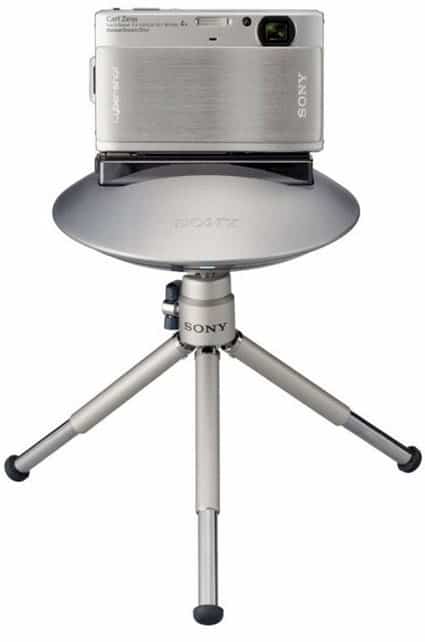
Sony today introduced the Party-shot personal photographer -an innovative camera dock that pans 360 degrees and tilts 24 degrees, automatically detects faces, adjusts composition and takes photos for you.

This device makes it easy to capture more natural expressions and fun, candid moments of you, your family and friends without having to hire a photographer.

“With the Party-shot personal photographer, you no longer have to worry about taking photos when you are with your family or friends,” said Shigehiko Nakayama, digital imaging accessories product manager at Sony Electronics. “Party-shot captures candid moments that tell natural life stories and also offers a new style of photography that enriches time with your family and friends.

From our 2000 presentation to Sony

Market Opportunity : Freedom to Participate

online pharmacy zestril over the counter with best prices today in the USA

Today
Defined set of occasions where

  • camera visibility/ interference is possible and accepted
  • cameraman takes on an assumed role

Opportunity to Increase Usage

  • Design cameras that are less bulky, obtrusive, “precious”
  • Enable experiences to be preserved without requiring someone to operate a camera

Our concept (to illustrate the opportunity) emphasized video over still
remote

Product Feature: Full Remote Control

  • Gives capturer full control over video camera while away from device
  • Includes viewfinder, volume, zoom/pan/tilt, battery/tape indicator
  • Capturer is not “tethered” to camera and can participate

Sony isn’t the only one to launch products that we identified. As we identified needs and proposed solutions, it’s inevitable that as time goes by, competitors will identify those needs and develop products. For example, three years ago I blogged about Granny’s Inbox where HP launched something similar to one of our Sony concepts.

Elsewhere, we see other products that have been developed by competitors since our work for Sony in 2000:

Digital Blue’s Tony Hawk Helmetcam
tonyhawk
and our X-treme Cam concept
X-tremeCam

  • Rugged, mountable video camera that captures short clips from the user’s point of view
  • Sharable, relivable document of exciting experiences
  • Appeals to teens and/or sports participants
  • Must be made inexpensive enough to justify its very specific (and thus limited) functionality

Hasbro’s VuGo Multimedia System
vugo
and our MPEG-Man concept
mpegman

  • Plays short clips of digital video
  • Like a photo album, device can be passed around for sharing in a larger group
  • Connect to TV, PC, or projector
  • Better group interactions for sharing video
  • Position as everyday, casual, social device rather than hi-tech or novelty

Casio EXILIM (and other models of still and video cameras from other manufacturers) feature Pre-Record Mode where

photos are not only taken at the moment the shutter release is pressed – they’re also taken before that! With continuous recording of up to 30 photos per second, a maximum of 25 photos can be saved in the camera’s buffer memory – even before the shutter release is pressed. The 25th image then corresponds to the photo that was taken when the shutter release button was pressed. This means that, in addition to the photo that you took at the moment the shutter release button was pressed, you can choose from a further 24 images that occurred just before that moment.

and our Capture Buffer concept (video but could be used for still as well)
capture

  • Video camera is always capturing and discarding footage
  • When user initiates recording, option of saving the contents of the buffer
  • People will no longer miss the beginning of what they want to film
  • Slightly more skill required by users – where was the camera pointing before the button is pressed?

Buffalo TeraStation Home Server
nas

and our Digital Memory Vault concept
vault

  • Permanent digital storage for stills and video
  • Indexing, organizing, online publishing
  • Random access retrieval
  • Simplifies organization and retrieval of images (and video)
  • Leverages familiar (to PC users) activity of searching (i.e., web search)
  • Appeals to customers who are already invested in digital imaging, or in legacy imaging (i.e., family albums)
  • Challenge to deliver expected bullet-proof reliability at an acceptable price point

Samsung TL225 with front LCD to prompt subject to smile, etc.
samsung

and our Teleprompter Cam concept (video but could be applied to still)
teleprompter

  • Image on screen prompts subject to pose for video
  • Helps people feel comfortable in front of a video camera
  • Positioning challenge: though most images are posed and theatrical, our culture privileges the capture of candid and “natural”

Reading Ahead: Managing recruiting

Reading ahead logo with space above

There’s always something new in every project. Often we encounter a bit of process that we may not know how to best manage it. So we’ll make our best plan and see what happens. We learn as we go and ultimately have a better way for dealing with it next time.

In a regular client project, we write a screener

online pharmacy cheap pharmacy

and work with a recruiting company who finds potential research participants, screens them, and schedules them. Every day they email us an updated spreadsheet (or as they call it “grid”) with responses to screener questions, scheduled times, locations, and contact info. It still ends up requiring a significant amount of project management effort on our end, because questions will arise, schedules will shift, people will cancel, client travel must be arranged, etc. etc.

For Reading Ahead, we did all of the recruiting ourselves. Although we’ve done this before, this may be the first time since the rise of social media: we put the word out on LinkedIn, Twitter, Facebook, email to friends, and here on All This ChittahChattah.

While Dan lead the effort, we both used our own networks, and so we got responses in a number of channels, sent to either or both of us, including:

  • @ replies on Twitter
  • direct messages on Twitter
  • Comments on Facebook posts
  • Messages on Facebook
  • Emails (directly to either of us, or forwarded from friends, and friends-of-friends

facebook
A private dialog on Facebook

facebook2
Comments on a Facebook status update. Note that Dan is able to jump in and make contact directly

twitter
Direct Messages in Twitter

Some people were potential participants, some were referrers to other potential participants, and some were both. And given the range of platforms we were using, with their associated restrictions (and unclear social protocols), we had to scramble to figure out who could and should communicate with who to follow up and get to the point where we could see if the people in question were right for the study. We didn’t expect this to happen, and eventually Dan’s inbox and/or his Word document were no longer efficient, and as some participants were scheduled or in negotiation to be scheduled, he ended up with this schedule cum worksheet:

schedule

Being split across the two of us and these different media, eventually we were interacting with people for whom we had to check our notes to trace back how we had connected to them, which was great for our sample, since it meant we weren’t seeing a group of people we already knew.

It was further complicated when we had finished our fieldwork and wanted to go back to everyone who offered help close the loop with them, thanking them for help. Technically, and protocol-wise, it took some work (who are the people we need to follow up with? Who follows up with them? What media do they use), basically going through each instance one-by one.

twitter2

We haven’t figured out what we’ll do next time; we won’t forget the challenges we’ve had but there’s just not time or need right now to plan for the future. If I had to guess, I’d imagine a Google Spreadsheet that includes where we got people from, who owns the contact, whether they are participant-candidate or referrer, etc.). Despite being very pessimistic about the demands of recruiting, we still underestimated the time and complexity required for this project.

Reading Ahead: Looking for the story

Reading ahead logo with space above

I started today by typing up all of the Post-it notes you saw in our recent blog post on Synthesis.

This activity created a 6-page Word document of bullet points.

The next part of the process is something I always find challenging: taking an incredibly detailed list of observations, particpant statements, hypotheses, and ideas; figuring out what the Big Ideas are (there’s a point in the process where many of them seem Big!), and putting those into a form that tells a cogent story.

First step: make a cup of tea.

Ok, then my next steps were:

  • Categorize all those bullet points
  • Synthesize those categories a bit further
  • Write down in as short a paragraph as possible what I would tell someone who asked me, “what did you find out?”
online pharmacy super-kamagra over the counter with best prices today in the USA

Then I went into PowerPoint, which is what we use when we present findings to our clients. I’ll continue bouncing back and forth between Word and PowerPoint; each piece of software supports a different way of thinking and writing.

I dropped my synthesized categories into a presentation file, sifted all of the bullet points from my Word doc into the new categories, and then started carving and shaping it all so that it started to follow the paragraph I had written. (I’m mixing cooking and sculpting metaphors here.)

I printed out the presentation draft, and laid it out so I could see the whole thing at once.

Portigal-Consulting_synth10

Steve came back from a meeting and I asked him to read over what I’d printed out. He started writing notes on my printouts, pulling out what he saw as the biggest of the Big Ideas.

Portigal-Consulting_synth11

We talked about what he’d written, which led to an energetic discussion in which we really started to breathe life into this. Tomorrow, I’ll start the day by iterating the presentation draft based on our conversation.

Series

About Steve