Posts tagged “design”

Features vs. Innovation

Although the principal conceit of Apple’s latest Mac vs. PC ad is, as always, “PCs suck,” the ad does a nice job pointing to the difference between innovative thinking and the mere creation of features.

cup-holder-suit

While the cupholder suit that appears at the ad’s end is presented as a joke, many companies do have an unfortunate habit of burdening their products with clunky, grafted-on features as they try to push their ideas into new territory.

Compare the cupholder suit to Apple’s breakaway MagSafe cord, which the ad references. While there’s some debate over how well the Magsafe cord actually does what it’s supposed to, it at least intends to address a real issue that computer manufacturers had previously ignored (people’s cords get tripped on, yanked out).

Discovering that aspect of the user experience – however Apple may have done this – and recognizing it as one worthy of design intervention is the real innovation here.

ChittahChattah Quickies

  • PC Makers Abandoning a Sales Pitch Built on Complex Specs – Ludicrous article claiming that all of a sudden, computers will be sold based on what they can accomplish, with a focus on aesthetics and design, and with models aimed at specific customer segments. How is any of this at all new? Much of this has been going on – to varying degrees of success – for well over a decade. And there's no indication that these "new" efforts will be any more well executed than they have in the past.
online pharmacy order lasix without prescription with best prices today in the USA

ChittahChattah Quickies

  • Japanese cultural norms – asking about weight – Insightful little culture-clash story; an American working in Japan isn't sure how to deal with blunt (especially from the Japanese!) questions about his increasing weight
  • Clive Thomson on Bruce Bueno de Mesquita, renowned for his use of mathematical game theory models for prediction – Those who have watched Bueno de Mesquita in action call him an extremely astute observer of people. He needs to be: when conducting his fact-gathering interviews, he must detect when the experts know what they’re talking about and when they don’t. “His ability to pick up on body language, to pick up on vocal intonation, to remember what people said and challenge them in nonthreatening ways — he’s a master at it,” says Rose McDermott, a political-science professor at Brown who has watched Bueno de Mesquita conduct interviews. She says she thinks his emotional intelligence, along with his ability to listen, is his true gift, not his mathematical smarts. “The thing is, he doesn’t think that’s his gift,” McDermott says. “He thinks it’s the model. I think the model is, I’m sure, brilliant. But lots of other people are good at math. His gift is in interviewing. I’ve said that flat out to him, and he’s said, ‘Well, anyone can do interviews.’ But they can’t.”
  • New York Times Magazine on the Beatles’ Rock Band videogame – This is a fantastic article that spans many big issues: gaming, music, performance, art, history, culture, product development, authenticity, creativity, entertainment, technology. It's a must-read.
  • Brian Dettmer turns books into sculptural pieces – Contemporary visual artists see opportunity in what many bemoan as the twilight of the age of the book. John Latham (1921-2006), Hubertus Gojowczyk, Doug Beube and others have treated books as sculptural stuff. But no one whose work I have seen tops that of Atlanta artist Brian Dettmer at Toomey Tourell.
online pharmacy order trazodone online with best prices today in the USA
online pharmacy buy robaxin no prescription online pharmacy

Reading Ahead: Core77 1-Hour Design Challenge

Reading ahead logo with space above

In our engagements with clients, we don’t stop with research reports. To help make our work actionable, we typically facilitate a workshop where we help our client teams flesh out opportunity areas into a broad set of product, service, and other concepts. Then they prioritize those based upon some relevant criteria, and move forward into further research, design, and development into something launchable. There’s no Reading Ahead client, but we’re moving forward with a element of this process through our collaboration with Core77 to stage a 1 Hour Design Challenge on The Future of Digital Reading

1hdc

We are asking designers to create a rich future digital reading experience, but making sure that the designs link back to our research findings. Here’s the pitch:

Of course, we encourage you to check out the full presentation of findings, but we’ve also boiled it down these highlights:

Portigal Consulting and Core77 will each be donating $300, in the name of the prize winner, to 826 Valencia (a nonprofit that helps kids with expository and creative writing, and San Francisco’s only independent pirate supply store). 826 Valencia will put together a celebratory gift bag (i.e., pirate booty!) to honor the winner. Results will be posted here and at Core77.

For more information about how and what to enter, check out One Hour+ Design Challenge: The Future of Digital Reading at Core77.

Also, we’ll be presenting will be presenting Reading Ahead: Considering The Book’s Future in the iPod Era at the UC Berkeley Center for New Media Design Futures series on September 30.

ChittahChattah Quickies

  • Seen Reading – a "literary voyeruism blog" set mostly (I believe) in Toronto – What is Seen Reading?

    1. I see you reading.
    2. I remember what page you’re on in the book.
    3. I head to the bookstore, and make a note of the text.
    4. I let my imagination rip.
    5. Readers become celebrities.
    6. People get giddy and buy more books.

    Why do you do this?
    Readers are cool. Authors work hard. Publishers take chances. And you all deserve to be seen!

    (Thanks Suzanne Long!)

  • Choose What You Read NY – Choose What You Read NY is a non profit organization that offers free books to New Yorkers, encouraging its residents to read more, giving them an alternative to the free papers that get tossed out and even the digi-trash that crowds our time. In doing so, we help to recycle used books that would have unfortunately been thrown away.

    You will find us near major subway stations on the first Tuesday of each month.The idea is that once someone is finished with a book, they either drop it off in one of our conveniently located drop boxes or back to us at a station. Unlike a library, there will be no due dates, penalties, fees or registrations. We only ask that you return it once you are done so that the same book can be enjoyed by another commuter.

  • What was the last book, magazine and newspaper you read on the subway? – 6000 people respond and the New York Times posts the results
  • How and what people read on the New York City subways – Plenty of detailed examples of people, their books, and their travels: "Reading on the subway is a New York ritual, for the masters of the intricately folded newspaper, as well as for teenage girls thumbing through magazines, aspiring actors memorizing lines, office workers devouring self-help inspiration, immigrants newly minted — or not — taking comfort in paragraphs in a familiar tongue. These days, among the tattered covers may be the occasional Kindle, but since most trains are still devoid of Internet access and cellphone reception, the subway ride remains a rare low-tech interlude in a city of inveterate multitasking workaholics. And so, we read.

    There are those whose commutes are carefully timed to the length of a Talk of the Town section of The New Yorker, those who methodically page their way through the classics, and those who always carry a second trash novel in case they unexpectedly make it to the end of the first on a glacial F train."

    (thanks Avi and Anne)

  • Lego grabs ahold of customers with both hands – From 2006, great Wired piece about Lego's approach to involving ardent fans/customers in developing future products.
  • Noting:books – the simple yet dynamic way to track your reading, from the dates you start and finish a book, to your thoughts along the way.
  • CourseSmart brings textbooks to the iPhone in PDF; major readability challenges ensue – “It’s not the first place to go to read your textbook,” Mr. Lyman said of the iPhone app. But he said that it could be helpful if “you’re standing outside of the classroom, the quiz is in 10 minutes, and you want to go back to that end-of-chapter summary that helped you understand the material.”
  • Nice profile of Lego’s business culture and the tension between growth and losing track of their legacy – But the story of Lego’s renaissance — and its current expansion into new segments like virtual reality and video games — isn’t just a toy story. It’s also a reminder of how even the best brands can lose their luster but bounce back with a change in strategy and occasionally painful adaptation.

ChittahChattah Quickies

  • New England prep school Cushing Academy gets rid of printed books – With more than 20,000 books, officials decided the school no longer needs a traditional library. They have decided to discard all their books and have given away half of what stocked their sprawling stacks.

    “When I look at books, I see an outdated technology, like scrolls before books,’’ said James Tracy, headmaster “This isn’t ‘Fahrenheit 451’. We’re not discouraging students from reading. We see this as a natural way to shape emerging trends and optimize technology.’’

    They have spent $10K to buy 18 Sony and Amazon electronic readers which they’re stocking with digital material for students looking to spend more time with literature. Those who don’t have access to the electronic readers will do their research and peruse assigned texts on their computers.

  • Neil Gaiman’s Bookshelves – Photographs of author Gaiman's extensive collection of books (via BoingBoing)

Get our latest article, We Are Living in a Sci-Fi World

robot
My latest interactions column, We Are Living in a Sci-Fi World has just been published.

Science fiction (also known as SF, which for many purists refers instead to speculative fiction) has taken on both of those pillars. But to the uninitiated, it’s presumed to consist only of the “stuff” -robots, aliens, gizmos, spaceships, and lasers that go pyew! pyew! (the noise that every boy can make from birth). To those of us who navigate interactions with people, a consideration of the future stuff is interesting, but exploring the future selves can be transformative

Get a PDF of the article here. To receive a copy of the article, send an email to steve AT portigal DOT com and (if you haven’t given us this info before) tell us your name, organization, and title. We’ll send you a PDF.

Other articles

Reading Ahead: Research Findings

Reading ahead logo with space above

(Updated to include slideshow with synchronized audio track)

We’re very excited today to be posting our findings from the Reading Ahead research project.

Lots more in the deck below, but here’s the executive summary

  • Books are more than just pages with words and pictures; they are imbued with personal history, future aspirations, and signifiers of identity
  • The unabridged reading experience includes crucial events that take place before and after the elemental moments of eyes-looking-at-words
  • Digital reading privileges access to content while neglecting other essential aspects of this complete reading experience
  • There are opportunities to enhance digital reading by replicating, referencing, and replacing social (and other) aspects of traditional book reading

We sat down yesterday in the office and recorded ourselves delivering these findings, very much the way we would deliver them to one of our clients.

Usually, we deliver findings like these to a client team in a half day session, and there’s lots of dialogue, but we tried to keep it brief here to help you get through it. (The presentation lasts an hour and twenty minutes.)

It’s been a great project, and we’ve really appreciated hearing from people along the way. We welcome further comments and questions, and look forward to continuing the dialogue around this work.


Audio

Reading Ahead: Building models

Reading ahead logo with space above

We’ve been hard at work synthesizing the Reading Ahead data. There’s a great deal of writing involved in communicating the results, and sometimes it makes sense to develop a visual model that represents a key idea.

Here are several partial models evolving through paper and whiteboard sketches, and finally into digital form.

We’ll be finishing synthesis soon, and publishing our findings on Slideshare, with an audio commentary.

Stay tuned…

Portigal-Consulting_synth5

Portigal-Consulting_synth4

models

Innovative Outcomes Take Years To Launch

In 2000, prior to Portigal Consulting, we conducted an ethnographic study with Sony to “provide awareness of unarticulated consumer perceptions about digital imaging on which to base future product development decisions…generating a range of new product and service concepts.”

Over the years we’ve seen Sony launch products that are similar to ones we proposed (see example here). We identify opportunities for our clients; the path they take to develop (or not) can be complex and fraught, and many opportunities are not addressed in the marketplace (although we find our clients value how our work helps them make that decision).

Here’s the latest:
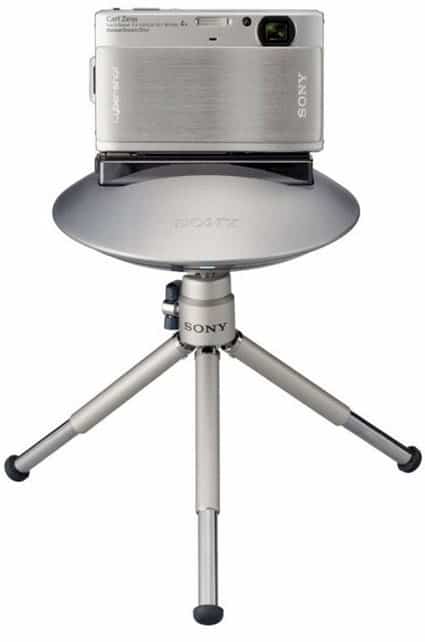
party

Sony today introduced the Party-shot personal photographer -an innovative camera dock that pans 360 degrees and tilts 24 degrees, automatically detects faces, adjusts composition and takes photos for you.

This device makes it easy to capture more natural expressions and fun, candid moments of you, your family and friends without having to hire a photographer.

“With the Party-shot personal photographer, you no longer have to worry about taking photos when you are with your family or friends,” said Shigehiko Nakayama, digital imaging accessories product manager at Sony Electronics. “Party-shot captures candid moments that tell natural life stories and also offers a new style of photography that enriches time with your family and friends.

From our 2000 presentation to Sony

Market Opportunity : Freedom to Participate

online pharmacy zestril over the counter with best prices today in the USA

Today
Defined set of occasions where

  • camera visibility/ interference is possible and accepted
  • cameraman takes on an assumed role

Opportunity to Increase Usage

  • Design cameras that are less bulky, obtrusive, “precious”
  • Enable experiences to be preserved without requiring someone to operate a camera

Our concept (to illustrate the opportunity) emphasized video over still
remote

Product Feature: Full Remote Control

  • Gives capturer full control over video camera while away from device
  • Includes viewfinder, volume, zoom/pan/tilt, battery/tape indicator
  • Capturer is not “tethered” to camera and can participate

Sony isn’t the only one to launch products that we identified. As we identified needs and proposed solutions, it’s inevitable that as time goes by, competitors will identify those needs and develop products. For example, three years ago I blogged about Granny’s Inbox where HP launched something similar to one of our Sony concepts.

Elsewhere, we see other products that have been developed by competitors since our work for Sony in 2000:

Digital Blue’s Tony Hawk Helmetcam
tonyhawk
and our X-treme Cam concept
X-tremeCam

  • Rugged, mountable video camera that captures short clips from the user’s point of view
  • Sharable, relivable document of exciting experiences
  • Appeals to teens and/or sports participants
  • Must be made inexpensive enough to justify its very specific (and thus limited) functionality

Hasbro’s VuGo Multimedia System
vugo
and our MPEG-Man concept
mpegman

  • Plays short clips of digital video
  • Like a photo album, device can be passed around for sharing in a larger group
  • Connect to TV, PC, or projector
  • Better group interactions for sharing video
  • Position as everyday, casual, social device rather than hi-tech or novelty

Casio EXILIM (and other models of still and video cameras from other manufacturers) feature Pre-Record Mode where

photos are not only taken at the moment the shutter release is pressed – they’re also taken before that! With continuous recording of up to 30 photos per second, a maximum of 25 photos can be saved in the camera’s buffer memory – even before the shutter release is pressed. The 25th image then corresponds to the photo that was taken when the shutter release button was pressed. This means that, in addition to the photo that you took at the moment the shutter release button was pressed, you can choose from a further 24 images that occurred just before that moment.

and our Capture Buffer concept (video but could be used for still as well)
capture

  • Video camera is always capturing and discarding footage
  • When user initiates recording, option of saving the contents of the buffer
  • People will no longer miss the beginning of what they want to film
  • Slightly more skill required by users – where was the camera pointing before the button is pressed?

Buffalo TeraStation Home Server
nas

and our Digital Memory Vault concept
vault

  • Permanent digital storage for stills and video
  • Indexing, organizing, online publishing
  • Random access retrieval
  • Simplifies organization and retrieval of images (and video)
  • Leverages familiar (to PC users) activity of searching (i.e., web search)
  • Appeals to customers who are already invested in digital imaging, or in legacy imaging (i.e., family albums)
  • Challenge to deliver expected bullet-proof reliability at an acceptable price point

Samsung TL225 with front LCD to prompt subject to smile, etc.
samsung

and our Teleprompter Cam concept (video but could be applied to still)
teleprompter

  • Image on screen prompts subject to pose for video
  • Helps people feel comfortable in front of a video camera
  • Positioning challenge: though most images are posed and theatrical, our culture privileges the capture of candid and “natural”

Series

About Steve