Posts tagged “design”

Florida Faux, part 2

During a recent trip to Florida I took some time to check out the Disney-founded community of Celebration.
streetsign.jpg
houses.jpg

The experience was much more subtle that I had expected; perhaps the true nature emerges more through residency than driving through. Overall, it felt a lot like The Truman Show – a set that made everything a bit too perfect and while one can appreciate just how nice everything is, it lacks a certain organic naturalness.

theater.jpg
The town theater is achingly new, yet completely retro. There’s no funk here.

reflect.jpg
square.jpg
The downtown area is beautiful, branding is kept to a minimum.

celbucks.jpg
Starbucks, the Americanized faux-Italian experience (so faux and so Americanized that you can enjoy it without knowing where it comes from) seems to fit right in (but then Starbucks is the ultimate brand for fitting in everywhere and anywhere).

segway.jpg
vehicle.jpg
These electric vehicles were ubiquitous, some turned into rolling advertising vehicles (as has happened with the PT Cruiser, the New Beetle, the Mini, and the Smart Car). I imagine the retirement communities in Florida have a wider general adoption of those vehicles and that’s part of the reason they are seen in Celebration.

chick.jpg

online pharmacy buy tamiflu online no prescription pharmacy

Chick-Fil-A branding at a church event.

sbucks.jpg
And about 2 miles down the road, familiar sprawl returns, highlighting the contrast. I think that’s the tallest Starbucks sign I’ve ever seen.

Previously: Florida Faux, part 1

Also: Orlando pictures; Miami pictures.

Tell me about yourself

myups.jpg

I’m an occasional user of MyUPS (although their failure to offer a daily email or RSS update to track a package is ludicrous) and when visiting the site this week I had to agree to their news Terms of Service and update my contact information. This sort of web form typically covers basic logistical information that someone who does business with you will need: address, billing information, etc.

But this time I was required to answer a question that was obviously tied to some market segmentation work they’ve done: which of these statements best describes you? with the following choices:

  • I don’t ship daily, but when I do, I want it to be quick and informative.
  • I use ups.com daily and know several shortcuts to save time.
  • I use ups.com to troubleshoot and to report on shipping activity.
  • I focus on the big picture and monitor shipping operations performance.
  • I prefer to use the web only when necessary. My job is easier without it.

First of all, it’s utterly inappropriate to require me to answer this question when I’m dealing with straightforward contact information that is necessary for UPS to have in order to provide the services I pay them for. Making them optional would be nice, but really this doesn’t go here at all. It’s hamfisted.

Second of all, it’s ludicrous to ask someone to find themselves in a badly written list such as this. What if I use ups.com daily but don’t know any shortcuts? Compound conditions are very hard for people to answer cleanly.

One has to wonder about the meeting where they decided this would be a good idea.

Aesthetics of interactivity

carnabystreetnav.jpg
Carnaby Street kiosk, London, July 2008

In a previous post I described an interactive display that looked like a static display. Here’s a static display that looks like an interactive display, through the color palette, the type of graphics, and the use of touchable materials (such as the black rubber) from consumer electronic devices.

See more of my London and Sheffield pictures here.

Core77 Show+Tell video: Steve investigates the bathroom

Yes, more bathroom blogging! Core77 has just posted a quick video I made

In this video for Core77, Steve Portigal takes us into his company bathroom, uncovering examples of bad design and its consequences.

From signage to artifact and back, people are forever mistaking their cues for how to behave, how to use products and systems, and how different, often-conflicting indicators cause our expectations and realities to collide. This 2-minute video is a priceless example. What’s in your bathroom?

Rage With The Machine

semi-coupe.jpg
Biodiesel-fueled coupe made from old semi truck, Half Moon Bay, California


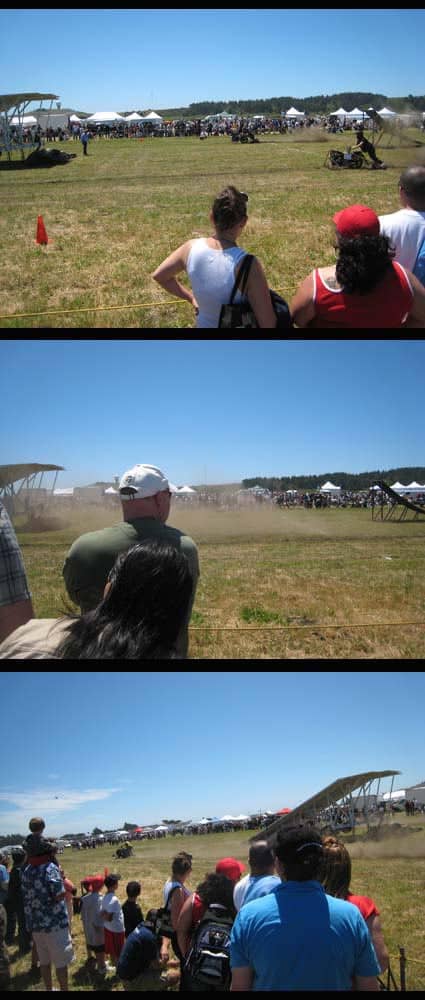
lawnmower-race-sequence.jpgLawnmower Races, Half Moon Bay, California
I went to a huge auto and machine show recently at a small airfield down the coast from San Francisco. I really love this kind of stuff, but my machine lust was battling thoughts of carbon footprints, sustainability and global economics that made it a little difficult to see the event as entirely wholesome.

Living in and trying to navigate this consumption/sustainability paradox is the conundrum of the day for anyone who loves things.

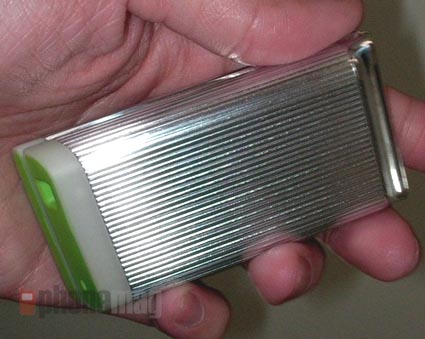
Nokia’s Jan Chipchase gave a talk at Adaptive Path a couple of weeks ago, and showed a model of the Remade mobile phone concept. The Remade is produced almost entirely by upcycling, a Cradle to Cradle concept whereby potential trash is transformed into something valuable and useful.

nokia-remade-concept-7.jpg
Appearance model, Remade mobile phone concept, Nokia. (picture from PhoneMag.com)

The extruded aluminum body of the Remade model seemed really tough, and made me think about what it would be like if products were built so well that they rarely broke.

Would that be the most sustainable approach to the object cycle-making things that lasted, and using them for as long as they lasted?

It’s a complex picture: there’s technological evolution constantly rendering our stuff obsolete, there’s the need for producers to continue to produce and sell what they make, and then there’s that crow/magpie thing-our persistent desire to add new objects to whatever we already have sequestered in our nests.

Thinking about a system this complex always leads to big questions. Here are some of mine for this round:

  • What is the relationship between remaking how objects are produced and shifting cultural attitudes toward consumption?

  • Can producers profitably focus on business models that take advantage of long use (for example by focusing more on post-purchase relationships and less on product replacement)?

  • Can it ever be as cool, sexy, and fun as buying new things to use our things for years and years, so that they acquire a patina, shape themselves to our bodies and our personalities, and bear scars that tell stories?

Or will that leave something fundamental in our natures (our crow-selves??) unsatisfied?

Mundane is the new fun


IxDA SF
Originally uploaded by blackbeltjones.


Last night we attended an IxDA-SF presentation of Matt Jones on “Playfulness in Design”. No full summary to share (although maybe Matt will post the slides eventually) but one great line was the statement that “Mundane is the new fun” which refers to the little interventions of joy that are being added to everyday life, providing a new veneer of experience on top of behaviors that were once only necessary for survival.

This was one of the themes of Virginia Postrel’s Substance of Style (with its legendary discussions of the broad range of choice now available for toilet brushes). It’s also something that I’ve seen a lot of in Japan. Here’s one quick example:
vacuum.jpg

This vacuum cleaner is fun: it is presented like a futuristic robot, available in at least 3 novel colors, and is styled in a notable way. This isn’t about making the chore of vacuuming fun, but about acknowledging fun as an ingredient can always be fun, from the purchase moment to the instant the vacuum is grabbed and turned on. Check out this elephant-robot for urinal cleaning as another example of fun. As a one-off, this is taking drudgery and distracting you with cuteness, but put together across so many product categories, brands, signage, TV advertisements and beyond, the notion of the constant layer of fun is so visible in Japan.

Matt is right at calling out the trend, and you can look to the Japanese as lead users of this trend.

User-Centered Government


Student Protest, Bonny Doon, CA 1987

Today is the 5th anniversary of the current US military involvement in Iraq. I heard Army Major General Mark Hertling speaking on NPR this week about helping members of Iraq’s central government figure out what people in the different provinces really want and need.

“We call it reverse helicopter governance – bringing the ministers to the provinces.”

This starts to sound a lot like the kinds of contextual research we use to inform product design. Going out and talking with users in their own environments. Seeing what people’s needs really are, rather than making assumptions.

There’s been a thorny debate in the Anthropology community about doing anthropological work in military contexts, but this is a different type of situation. Hertling is talking about facilitating Iraqi ministers to do contextual research on the people they are charged with serving as government officials.

What would it look like to take a further step, and take a design approach to creating a “user-centered government?”

One important aspect of design is a spirit of playfulness-in the sense of “serious play.” A spirit of willingness to reassess the meaning of a problem and the range of possible solutions. To prototype rapidly and try multiple approaches.

Michael Schrage, the author of Serious Play states that

“…the real value of a model or simulation may stem less from its ability to test a hypothesis than from its power to generate useful surprise.”

Ideation and design processes have been used to solve some pretty complex problems. Steve wrote last year about introducing empathy and user-centered design into government. Participatory processes and contextual inquiry have become much more prevalent in development work.

What could be done to bring more of the spirit of serious play to bear on the ways that problems like civil and international conflicts are framed and addressed?

Stefan Sagmeister, Performance Ideator

stefan-5.jpg

Graphic designer Stefan Sagmeister gave a wonderful talk Wednesday night at Stanford, as part of the David H. Liu Memorial Lectures in Design series. He focused on Things I Have Learned In My Life So Far, a group of projects based on a list of personal maxims he took from his diary.

For me, the highlight of the talk came when someone in the audience asked about Sagmeister’s ideation methods. After mentioning “hotel rooms in foreign cities,” Stefan described an Edward DeBono lateral thinking approach which involves looking at a project from “a completely nonsensical point of view.” Then he picked up his water bottle and did an off-the-cuff ideation that created a perfect little gem of a moment.

I’ve paraphrased a bit, but this captures how he talked through his process:

“Say you were going to design a new water bottle. You could base it on a . . . zipper” (the choice was triggered by a zipper on the jacket of an audience member in the front row).

“Let’s see, it could interlock” (demonstrates by spreading and interlocking his fingers), “You could have 2 that go together . . . maybe a 4-liter bottle that comes into 4 parts. That wouldn’t be too bad.” (pause)

“Not bad. DeBono would be proud.”

online pharmacy purchase robaxin online no prescription

From start to finish, this ideation took about 10 seconds, and it was just a great illustration of a creative thinking process.

This demonstration, coupled with a caution Stefan made about the dangers of starting ideation from existing solutions and opinions, got me thinking about the art of research.

Design research is often positioned as a kind of counterbalance to the type of creative act I’ve just described. But, when it’s well-practiced, research includes a juxtaposing and synthesizing of ideas that is similar in creative process to the bottle+zipper riff. Just as with other aspects of the design process, research culminates in possibilities for new ways that things can go together. For design researchers, the materials for this synthesis include a deep and focused exploration of people: behaviors, bodies, meaning, culture, complaints, wishes, lies and truths.

At the beginning of the night, Stefan talked about his fear of doing graphic design primarily for other graphic designers, comparing it to playing “music for other musicians.” He said at a later point, “If you can reach a mass audience with good quality, that’s the highest honor” (and listed the Arch of St. Louis, The Simpsons, and the Champs Elysees as examples).

The beauty of integrating a focused understanding of people into the whole design process-using it as one of the basic materials with which to design-is that what comes out the other end of the pipe will be imbued not only with the vision of its creators but with the soul of that wider audience as well.

Design and Research had a baby and they called it . . .

personal-greenhouse_no-tag.jpg
Sketches for “Personal Greenhouse” ¬©2007 Dan Soltzberg

Debbie Millman and Mike Bainbridge have posted their article, Design Meets Research, over at Gain: AIGA Journal of Design & Business. The piece provides a quick overview of various tools in the research toolbox, calls out their particular strengths and drawbacks, and makes the point that picking the right tool for the job and using it well are paramount.

Here are a couple of quotes from the article and some of my thoughts in response:

There are a wide variety of research techniques that can have merit for designers. . . There is not, repeat not, one correct way to test design.

I see research very much as a generative tool as well as an evaluative one, and have started to question whether the concept of a border between research and design is really accurate or productive. At the front end of the design process, research is a way of surfacing opportunities and generating ideas. At later stages, it’s a way of refining and validating these ideas as they become concepts and prototypes. In this way, research is a design tool in the same way that drawing is a design tool, except that at the center of the mechanism is the customer/user.

When used correctly, research shouldn’t stifle creativity but rather offer designers stronger inspiration and focus.

By taking a facilitative, collaborative approach to working with companies and design teams, research and research findings can be integrated into the design process in ways that enhance rather than stifle creativity. Keeping the customer/user and their needs prominent throughout the design process needn’t be limiting–having clear goals and constraints ultimately makes a design problem more interesting and leads to better, more elegant solutions.

And better, more elegant solutions are, after all, the end game here.

Sliding Doors

broom.jpg
Public bathroom doorway, Karuizawa, Japan, January 2008

Before we hiked up the nearby mountain I wanted to use the bathroom. I was very frustrated to find the door locked. I pushed and pulled and saw the keyhole for the deadbolt and figured I was out of luck. Then I saw someone enter the adjacent women’s room – by sliding the door. I wouldn’t expect a bathroom door to slide, and I didn’t interpret any of the cues (or affordances) about how this door works to suggest sliding was a possibility.

Series

About Steve