Where Credit Is Due

card
Magnises is a new sort-of-credit-card that evokes an ultra-elite black card. It’s not actually a credit card, though. As they describe it

Each Magnises member carries our distinctive metal membership card, which extends and enhances their pre-existing credit or debit card, and provides perks, benefits, and access to numerous high-end brands. Upon admittance, Magnises will construct a card for each new member. Magnises will then extend the magnetic signature from the member’s personally owned credit or debit card onto their new Magnises card.

Yep, that’s right. You get a metal card that looks like a credit card but simply has the credit card data copied onto it – from the credit card you already own. While there are perks, no doubt, with this card, it is not actually the thing it denotes. It’s merely a gussied-up package for the quotidian plastic in your wallet (well, maybe not your wallet, if you are reading this it’s unlikely you are cool enough to qualify).

As a species, our ability to create meaning out of almost nothing – and then charge money for the performance of that meaning – is astonishing.

For more, see

Magnises Black Card Has Its Privileges (Well, Sort Of) [NYT]

Serving Up Carrots

A very small social experiment, more something to reflect on rather than proof of anything.

The Petite Syrah café in the Riviera city of Nice, has implemented a new pricing scheme. “A coffee” will set you back €7, according to the sign, while “a coffee please” is a little more affordable, at €4.25. If you want keep your expenses down, and stay friends with your local barista, however, the best option is “Hello, a coffee please,” which will only cost you €1.40.

Manager of the Petite Syrah, Fabrice Pepino, told The Local: “It started as a joke because at lunchtime people would come in very stressed and were sometimes rude to us when they ordered a coffee. Although Pepino admits he’s never actually had to enforce the price scheme, he says he has noticed a difference in his customers’ behaviour. “Most of my customers are regulars and they just see the funny side and exaggerate their politeness,” he said, adding “They started calling me ‘your greatness’ when they saw the sign. But people are more relaxed now, and they’re smiling more. That’s the most important thing.”

The framing here is important: there’s a reward for the behavior the business wants. It’s not a punishment for failing to adhere to the rules (e.g., surcharge for being a dickhead: $3.00

) – even though it’s the same thing economically, behaviorally it’s entirely different. It’s the carrot versus the stick.

As well, the outcome is less about adherence to the rules and more about the increased mindfulness about a detail of the interaction. We’d need to come back and see what happens after the regulars attenuate to this change, but the empowerment that the rules produce as a consequence is quite enticing.

Also see previously: A silly (?) coffee pricing scheme at Tim Hortons.

The Future of the Book, you say? [2013 edition]

Reading ahead
In 2010, we conducted a public-facing study about the future of books and reading, called Reading Ahead. We raised many fascinating questions including the design implications for the digital book experience: which elements of the traditional experience should move forward and which should be left behind.

Looking at the issue a few years later is the New York Times, with Out of Print, Maybe, but Not Out of Mind

Some functions of physical books that seem to have no digital place are nevertheless being retained. An author’s autograph on a cherished title looked as if it would become a relic. But Apple just applied for a patent to embed autographs in electronic titles. Publishers still commission covers for e-books even though their function — to catch the roving eye in a crowded store — no longer exists.

What makes all this activity particularly striking is what is not happening. Some features may be getting a second life online, but efforts to reimagine the core experience of the book have stumbled. Dozens of publishing start-ups tried harnessing social reading apps or multimedia, but few caught on.
…
Much of the design innovation at the moment, Mr. Brantley believes, is not coming from publishers, who must still wrestle with delivering both digital and physical books. Instead it is being developed by a tech community that “doesn’t think about stories as the end product. Instead, they think about storytelling platforms that will enable new forms of both authoring and reading.”

This Week @ Portigal

The year is winding down and over here it’s periods of frenzy alternating with chunks of extreme slow.

Out and About: Steve in New York

Last week I was in New York to speak with two groups at SVA and at IxDA (also to see the city, eat desserts and hang with friends). Here’s some of the pictures I took during my trip.

photo1

online pharmacy elavil no prescription pharmacy

“I Know A Guy, Inc.”

photo2
The New Colossus by the Bruce High Quality Foundation, public art at Lever House that references the ubiquitous labor action inflatable rats.

photo3
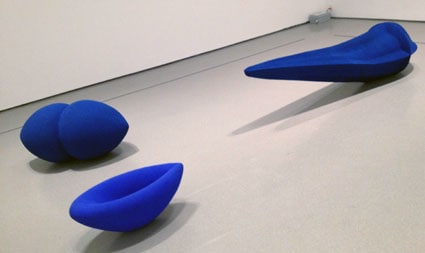
Blue by Anish Kapoor at MOMA, chock full of subtlety.

photo4
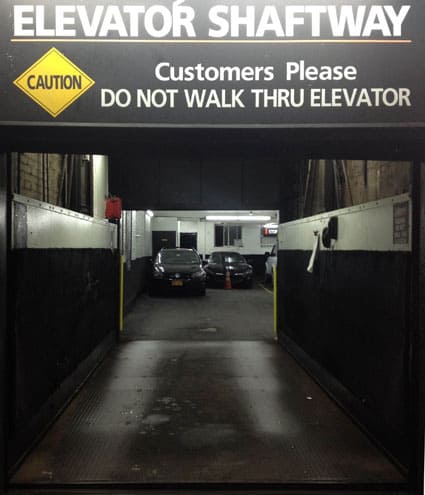
DO NOT WALK THRU ELEVATOR.

photo5
The Strand Book Store unloading some similar titles about the women behind the men of the sea.

photo6
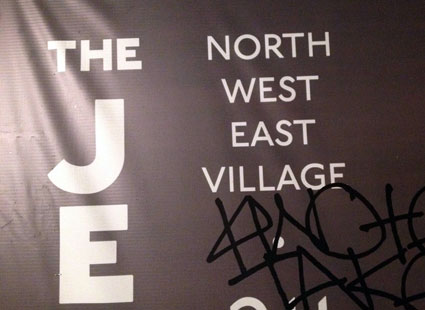
Hyperlocal.

photo7
Papa Moozi

photo9
A mini-Jurassic Park seen as street art around sidewalk greenspace.

New York previously: Summer 2013, 2011

This Week @ Portigal

This is the 100th of these updates. No, we won’t be pausing to reflect, just simply making note of it.

  • Just about every week has its own flurry of business-development activity, whether it’s the all-engrossing minutiae of setting up phone calls or the ominous waiting-to-hear-back; I have for the most part stopped reporting on it here and I’ll all say this week is that there’s a particular end-of-year-budget flavor that is emerging. As always, we’ll see what happens.
  • Out-and-about this week: I’m looking forward to seeing Leah Buley and Scott Berkun speak at BayCHI on Tuesday. I’ve never seen either of them present before! Also, on Wednesday, I’m going to see Barry Katz speak about The Amazing, Incredible, Unbelievable History of Silicon Valley Design. Hope to see you at either event!
  • Ten years gone: From December 2003 – Headvertising, The Availability of Mr. Potato Head.
  • What we’re consuming: pretzels in milkshake form, Broadchurch, Art Spiegleman, donuts, Paul Cadmus.

This Week @ Portigal

It’s December! We’re in the home stretch for 2013. Also, it’s CyberMonday, a fact which Facebook reminded me of today, sending a notification to the Portigal Consulting page with the helpful advice to “write a post about it.” Gee, thanks.

Interviewing Users: Link Roundup

interviewing-users

Interviewing Users is now available. Get your copy here!

It’s been seven months Interviewing Users came out! Below is a roundup of links to various bits connected with the book. I’ll republish this regularly with accumulated updates.

The Book

Reviews

Interviews

Presentations

Other

Today we are twelve

12

Today is the twelfth anniversary of All This ChittahChattah. And since it overlaps with Thanksgiving, I’ll give thanks for all the feedback and encouragement I’ve received for this blog in those twelve years. Hooray!

Steve interviewed about Best Practices For Interviewing Your Audience

interviewing-users

Interviewing Users is now available. Get your copy here!

I spoke about Interviewing Users with Connie Malamed for the eLearning Coach podcast. Listen at the link, or below.

WE DISCUSS:

  • The impact that interviewing has on the product and the designer
  • The places in a design/development cycle where user input is needed
  • Skills needed to become good at interviewing users
  • What you’ll need to unlearn
  • The best attitude to have while interviewing
  • How to think about and manage “reticence”
  • Techniques to reinforce learning about the interviewee
  • How to plan for an interview
  • Tips for asking good questions
  • Ways to record interviews

Series

About Steve