Don’t put your garbage here! Please!

sleep-study

buy metformin online https://www.rrvbc.org/wp-content/uploads/2014/04/33.html no prescription pharmacy

I encountered this box recently at my local medical office. It’s a squat white bin with a wide black opening near the top. It looks a lot like a trash bin. Obviously I’m not the only person that reacted that way, because they’ve tried desperately and ineffectively (with EXTRA SIGNS as they so love to do in healthcare) to communicate that. There are three signs (see the orange pointer) telling you what the box is for (dropping off sleep study equipment) and two signs (the purple pointer) telling you what it’s not for (it’s not for garbage).

That’s five different signs, only two of which even vaguely cohere with each other (the red tape), all requiring English. The net effect is chaotic. There’s no empathy here; each message acts as if it’s the only one, without awareness of the others.

And still – the thing looks like a garbage bin! That message is loud and clear and no amount of signage will get around that. But the staff who have to pick the garbage out of there have no control over the bin’s design and so they are left with their default tool: signage.

I wonder if they could do better if they went further, such as painting the white surface and/or the black flap to more strongly shift the meaning. Or by having a sleep study device (which comes in a little carrying case) or at least a large icon near the opening. And a garbage bin nearby. The tactic would be to communicate more visually and directly what stuff (sleep study devices, trash) goes where and not rely on words. Until then, they can expect more trash.

See previously Signs to Override Human Nature? as well as other writing about post-design.

Contextual research from a bygone era

While listening to This American Life I learned about Roger Barker, a psych professor who turned the small Kansas town of Oskaloosa into a laboratory in the late 1940s.

Barker was one of the most extraordinary — and least known — figures in the history of psychology. Shortly after he became chair of the KU psychology department in the late 1940s, he relocated his family to Oskaloosa to observe and gather data about the residents who lived in the town, population 725.

At that time, psychological research was primarily done in laboratories. “It was the era of running rats through mazes to understand human behavior,” he said. “Barker said you won’t learn about any real human behavior in a laboratory. If psychologists want to understand human behavior in the real world, they must enter the real world.”

More from this article

Among Barker’s more unusual efforts was a 1951 paper he co-wrote under the title “One Boy’s Day.”

It chronicled 14 hours in the life of a local boy with the pseudonym Raymond Birch . He was 7 when Raymond’s parents allowed the Midwest Psychological Field Station to record his every movement, according to Sabar’s book:

7:00. Mrs. Birch said with pleasant casualness, ‘Raymond, wake up. …’
7:01. Raymond picked up a sock and began tugging and pulling it on his left foot. …
7:07. Raymond turned to his dresser and rummaged around among the things on it until he obtained a candy Easter egg for his dog.

The notations, archived at KU, track Raymond on his walk to school. He finds a baseball bat in the grass and swings it, accidentally striking a flagpole.

“This made a wonderful, hollow noise,” researchers wrote, “so he proceeded to hit the flagpole again.”

Barker eschewed academic prose and wanted his charges to record any telling, prosaic detail.

Through the 1950s, Oskaloosans grew accustomed to the sight of a child being shadowed by a note-scribbling adult. In published papers, this was the town of “Midwest,” in keeping with the scientific practice of shielding the identity of the subjects being examined.

Barker’s work differed from other scholarly studies of places such as Muncie, Ind., (Middletown) and Candor, N.Y., (Springdale) in at least two ways.

First, it focused less on class and politics and more on the relationships that made kids feel comfortable.

Second, Barker’s family settled into Oskaloosa as a permanent home. Roger and Louise continued to live there until their deaths, Roger’s in 1990 at age 87 and Louise’s in 2009 at 102.

While Barker used many methods, the part that struck me was his belief that simply documenting in exhaustive detail the ordinary activities throughout the day would somehow provide some additional insight. What would Barker have made of today’s era of personal analytics, data smog, quantified self and beyond?

Smart stuff that seems dumb

Watch and laugh as Stephen Colbert takes on the Vessyl smart cup. While the company’s video patiently explains the features, their benefits and the design rationale, Colbert calls out the ridiculous jargon (e.g,. “real-time” is not something novel for people in their daily lives which of course take place in real time) and – most devastatingly – the lack of a compelling use case.

This is the barrier all Internet-of-Things things will have to overcome – so what? Why does it matter to me that I can do this with that and with my iPhone? This recent review of Belkin’s Smartphone-Controlled Crock-Pot – a product that is currently shipping from a major manufacturer – says that it” feels more like a solution in search of a problem.” While the crock-pot isn’t as ridiculous (as it’s presented without the overblown ego), it shows just how immature today’s products are.

I recommend these companies aim their products at the hobbyist/maker users who will figure out what they might actually be good for and otherwise keep them in the lab until they are compelling to regular people.

[Disclosure: I bought a smart light bulb via Kickstarter a while back. I can change it to any color or brightness using my iPhone. I also have to use the smartphone to turn it off and on (properly) which takes about 35 seconds. I just put it back in our “light bulbs” box in the closet.]

What we eat and what we trash

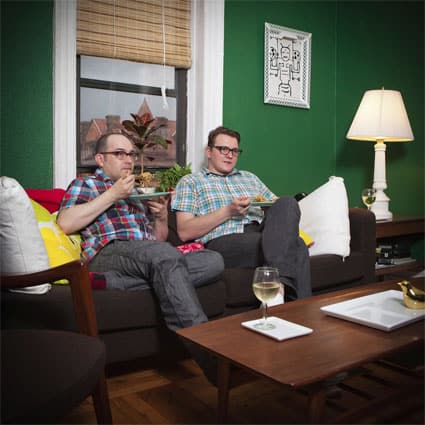
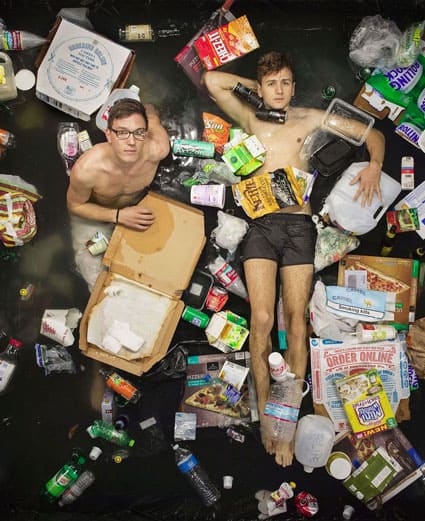
There’s no end of photography projects documenting an ordinary aspect of life, across diverse individuals, with the hope of throwing some light on who we are and how we live now. Or how others live. It’s art with the frisson of anthropology. Here’s another two in the same vein, each looking at different elements of our consumption.

Dinner in NY by Miho Aikawa looks at people having dinner, in New York (hence the clever title).


couch
mushroom

Also see Dinner in Tokyo and read more at Slate.

With no nod to naturalism, Gregg Sega shoots portraits of people surrounded by 7 Days of Garbage.

one
two
three

Also see the fascinating project frogdesign did back in 2007, where staff blogged about the trash they found themselves accumulating throughout a regular week, and read more about Gregg Saga’s project at Slate.

This Week @ Portigal

A top of the week to everyone.

This Week @ Portigal

Hello y’all!

The veneer of empathy

From this article about newsroom practices at USA Today

For Social Media Tuesdays, the staff must act as if there is no other way to get their articles except through sites likes Facebook and Reddit. That means USA Today’s journalists diligently place each of their famously punchy, graphic-rich stories onto various social media platforms. The purpose is to get them thinking like their readers, who increasingly get news through their Twitter feeds instead of the paper’s front page or home page.

“Think like your reader” is a generous framing as it highlights empathy, and who wouldn’t want their company, their products, their staff to be more empathetic? In fact, trying to get attention through social media is an exercise in manipulation (see Harry McCracken’s analysis/history of the “restore your faith in humanity” flavor of linkbait). That’s not empathy.

I’m not sure if this distortion was introduced by the reporter directly or whether they simply took what they were given at face value. Either way, that’s poor journalism (which is ironic in an article about the challenges facing the newspaper industry).

Now, the idea of taking what you know how to do and setting it aside, as a creative constraint, is a fabulous approach, like something from Oblique Strategies

online pharmacy order topamax online with best prices today in the USA

(See more about Brian Eno, one of the creators of Oblique Strategies, in this great article about his approach to art and creativity).

This Week @ Portigal

Good Monday morning to all!

online pharmacy buy zetia online cheap pharmacy

Ugly Yet Yummy

From the New York Times comes this story about Fruta Feia, or Ugly Fruit, a cooperative in Lisbon that has found opportunity through a combination of economic pressure and reframing conventional norms for food appearance.

There is a market for fruits and vegetables deemed too ugly by government bureaucrats, supermarkets and other retailers to sell to their customers. A third of Portugal’s farming produce goes to waste because of the quality standards set by supermarkets and their consumers. Fruta Feia buys the unwanted food at about half the price at which producers sell it to supermarkets. It has quietly subverted fixed notions of what is beautiful, or at least edible.

online pharmacy purchase lipitor online generic

Take pictures (of food that) lasts longer

burrata

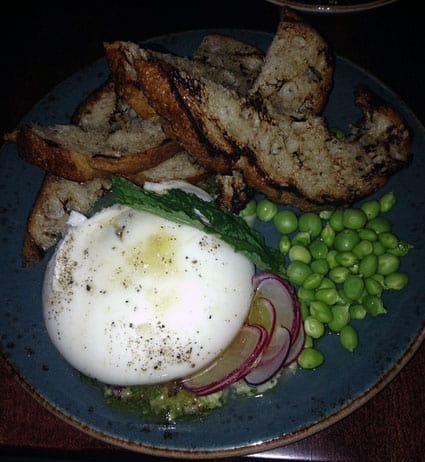
Insanely delicious burrata small plate, from Alden and Harlow in Cambridge, MA

On one hand this is just another article

buy bimatoprost online bimatoprost no prescription

about the hype that social media more easily enables, but on the other hand, it draws the (perhaps spurious) conclusion that since so many diners are taking pictures of restaurant food (and posting the pictures online), that restaurants are designing food for photographic appeal first and for taste a noticeable second.

Cameras that can capture and transmit images in an instant are being used to photograph food that is meant to hang out indefinitely in suspended animation. Parceled out on a slate tile and pitilessly accessorized with leaves, crumbles, froths and sauces (set with emulsifiers so they never break down), even a charcoal-grilled steak would be as cold as a bologna sandwich. And this is what now passes for great, or at least significant, cooking. But great food is rarely static. As soon as it leaves the kitchen, it’s changing. In general, it’s getting worse. The soufflé is sinking. The arugula is wilting. The color of the steak excites us because it’s deeply browned, and we know that toasted, roasted, seared and caramelized surfaces mean deep flavors. But cameras hate brown food.

Again, I’ll suggest this is not necessarily true, but it serves to remind us of unintended consequences, and at the scale of social media, we are seeing more of this special type of unintended consequences, where we create with the consumption in mind. The media consumption used to be a consequence, but perhaps it’s becoming the primary design target. As consumers, we learn how to participate in experiences so that they can be documented and shared (and earn those addictive likes) and as producers, those that create those experiences, we are learning how to stage them so that they can be more easily shared and earn addictive likes (and valuable cash rewards as well). Public speaking in easily-tweetable soundbites or food-plating in easily-instagrammable bites; either way it all feeds the beast.

Series

About Steve