ChittahChattah Quickies

Rate This Article: What’s Wrong with the Culture of Critique [Wired.com] – Are mounting (and recursive) reviews and opinions on every-little-thing blinding us with tidal waves of bias and robbing us of fundamentally human experiences such as the joys of discovery and failure?

Our ever more sophisticated arsenal of stars and thumbs will eventually serve to curtail serendipity, adventure, and idiotic floundering. But more immediate is the simple problem of contamination. When the voices of hundreds of strangers, or even just three shrill ones, enter our heads, a tiny but vital part of ourselves is diminished. Suddenly we’re breached, denied the pleasure of articulating our own judgment on this professor, or that meal, or this city… There’s an essential freedom in being alone with one’s thoughts, oblivious to and unpolluted by anyone else’s. Diminish that aloneness and we start to doubt our own perspective. Do I really think Blue Bottle coffee is that great? Or Blazing Saddles that funny? Do I really not like that pizza place because it isn’t authentic New York-style? Sure, it’s entirely possible to arrive at one’s own opinion amidst a cacophony of others. But it’s also possible to bend, unknowingly and imperceptibly, toward a position not naturally our own.

Radical Sharing Works: This Guy Lets the World Use His Starbucks Card for Free [Good.com] – Accidental, experimental business model proves effective, adds unexpected value.

On July 7th, Stark loaded $30 onto his card and posted the image for his friends to use. Within hours, the money turned into caffeine and prefab sandwiches. So Stark added another $50 and invited a few more friends to see if they liked paying for things with their phones, creating an informal user experience focus group. But this time, the money didn’t vanish. People started adding money as well as spending it. And since then, it’s become an experiment in anonymous collective sharing. Buying a cup of coffee on the card becomes a special act of participation, and giving back so a stranger can do the same just feels good, and certainly better than the average frappuccino. In that way, the technology Stark created is adding value to the coffee people purchase. “Overall it’s working,” he says. Stark created a little program that would check the value on the card and post it to Twitter, so experimenters could see if there is enough for a cup o’ joe before heading out to Starbucks. More and more people joined. As of about 11 a.m. PST today, Stark said that about $3,664.24 had passed through the card.

The Dolores Park graffiti artist story

Here’s a photo I took in San Francisco during the Summer of 2010, my first summer living here. The image now appears on my business cards in our “What’s Your Story?” series.

I don’t know who this man is. Where he is, that’s easier: Dolores Park is a small park, two blocks by one block, in the middle of the city. It serves as a gathering place for a variety of inhabitants hailing from the colorful neighborhoods the park borders and defines: the always festive LGBTIQQ contingent from the Castro, picnicking families from Noe Valley, Old Style-sipping hipsters and slouching Hispanic teens from the Mission, and drumming hippies from the nearby Haight…and various intersections of the aforementioned. On this day, a festival sprung up on the hill involving DJs and street artists.

The angle of the sun was just right to catch this artist in a reflection of his own process.

Here’s a broader shot of the scene.

Street art, which usually happens under cloak of darkness, had a light shining on it that day.

ChittahChattah Quickies

The Saddest Movie in the World [Smithsonian.com] Describes the rigorous process of choosing clips that will reliably evoke various emotions for clinical research purposes, and how the use of movies to elicit unpleasant emotional responses is considered humane and ethical. It’s incredible that a Ricky Schroder scene from the rather obscure The Champ has been scientifically deemed sadder than, say, Bambi’s Mom dying or Old Yeller. Can’t argue with science! (But I’d bet that the first 5 minutes of Up would beat them all.) Another gem here: the two clips that are proven most effective in generating feelings of disgust – yes, I’m on about disgust again! – are an amputation and… Pink Flamingos!

The story of how a mediocre movie became a good tool for scientists dates back to 1988, when Robert Levenson, a psychology professor at the University of California, Berkeley, and his graduate student, James Gross, started soliciting movie recommendations from colleagues, film critics, video store employees and movie buffs. “Everybody thinks it’s easy,” Levenson says. Levenson and Gross ended up evaluating more than 250 films and film clips. They edited the best ones into segments a few minutes long and selected 78 contenders.

Scientists testing emotions in research subjects have resorted to a variety of techniques, including playing emotional music, exposing volunteers to hydrogen sulfide (“fart spray”) to generate disgust or asking subjects to read a series of depressing statements. They’ve rewarded test subjects with money or cookies to study happiness or made them perform tedious and frustrating tasks to study anger. “In the old days, we used to be able to induce fear by giving people electric shocks,” Levenson says. Ethical concerns now put more constraints on how scientists can elicit negative emotions. Sadness is especially difficult. How do you induce a feeling of loss or failure in the laboratory without resorting to deception or making a test subject feel miserable? “You can’t tell them something horrible has happened to their family, or tell them they have some terrible disease,” says William Frey II, a University of Minnesota neuroscientist who has studied the composition of tears. But as Gross says, “films have this really unusual status.” People willingly pay money to see tearjerkers-and walk out of the theater with no apparent ill effect. As a result, “there’s an ethical exemption” to making someone emotional with a film, Gross says.

To win, deliver relevance

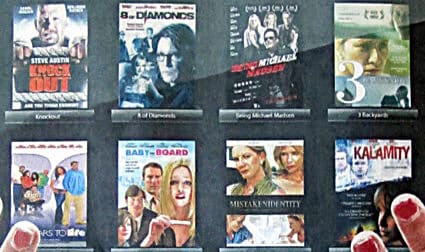
HP recently ran a series of full-page newspaper ads for its TouchPad. The different ads trumpeted different aspects of the product. Here’s one:

This particular ad focuses on the movie-watching benefits. Unfortunately, they ad begins poorly: The all-new HP TouchPad with the HP MovieStore powered by RoxioNow(TM).

The classic tech marketing mistake: brand soup (with a base of presumed relevance). Who is Roxio? Yes, readers of this post probably know, but let’s agree that most people don’t, and those who did haven’t heard of them for 5 years. What the heck is RoxioNow(TM)? We can infer that HP has struck a deal for some ingredient technology. Wonderful. But they shouldn’t presume that adds credibility to their offering. In the same way “HP MovieStore” is not a known brand and isn’t exactly dripping with credibility. At least you can figure based on the name that it’s somewhat like that other Pad company’s SomethingStore.

But it gets worse. Here’s the promise

It’s Hollywood’s recently released big screen movies and current TV episodes on your HP TouchPad. Catch up on something you missed or get hooked on something new.

But in this ad, where they can show whatever they want to highlight the compelling benefits, what movies do they display?

The highlighted films: Knockout, 8 of Diamonds, Being Michael Madsen, 3 Backyards, 30 Years to Life, Baby on Board, Mistaken Identity, and Kalamity.

Okay, anyone? 3 Backyards is a very recently released indie film. IMDB tells me 30 Years to Life is from 2001. Where are the recently released Hollywood big screen movies (note: direct-to-video doesn’t count) that I can get from the HP MovieStore powered by RoxioNow(TM)?

Next time you are sitting in a meeting and someone brings up Apple and wonders how it is they are so darn innovative, remember this example. This is how their competitors behave. This is their advertising – where they actually promise a wonderful experience; what does this portend for the actual delivery of the experience in the product itself?

Put the muffin down

Interesting ritual-gizmo from Fresh Choice (an all-you-can-eat chain). At a buffet, how do you stop the staff from clearing your plates when you stand up to get more (or visit the restroom), especially if you dine alone? Here’s their solution, a two-sided laminated muffin card that you keep next to your plate.


I believe these are available as you arrive (at Fresh Choice, upon arrival you go through a cash line to pay and get your plate) although I didn’t see them. I saw the muffin cards around the restaurant as I walked back and forth to get more food.

While it does seem like a workable solution, it seems like a half-measure, shifting the service responsibility onto the customer. At a “nice” restaurant, the staff are attentive, but here you are doing self-service what with retrieving your own food, so maybe they figure why not give the diner another task to manage.

online pharmacy buy atarax no prescription with best prices today in the USA

ChittahChattah Quickies

The Writer of a Cat Food Commercial Confronts a Focus Group [McSweeneys.net]

online pharmacy fluoxetine no prescription

– This “Short Imagined Monologue” by Mike Gallagher has a little fun with the unfortunate power dynamics of a focus group, and the struggle those behind the glass can have accepting the feedback that they are asking (and paying) for. Fault must lie at the feet of the participants, who are clearly incapable of understanding!

I don’t mean to startle you by barging into your focus group like this. Everything’s cool. I’ve been watching you guys from behind the one-way mirror there and I thought I’d make my presence known. Normally I’m content to just chill behind the glass, make disparaging comments to my fellow observers, and eat handfuls of M&Ms. And while I know this is “highly irregular” I feel like I have to say something to help you better understand the overall messaging, the gestalt if you will, of the TV commercials we’re testing here today. Not to take anything away from Fiona, your lovely and talented focus group moderator. Hey, she’s doing a great, great job… I don’t think you people truly appreciate what’s at stake here. We, all of us, are tasked with “redefining” the pet food commercial from the bowl up… What’s concerning me is that my work may be too- strong for you groundlings. Too avant-garde. So this one time I’m going to explain it very slowly and in terms you can all understand. Like captions for the “Thinking Impaired”.

Discomfort, reframed (almost)

Two examples of hotels in noisy environments, where they each acknowledge (and try to reframe) the situation in order to provide the solution (earplugs).


Seattle’s Edgewater Hotel

Railroad Development in the Puget Sound Area is much more than just steel tracks and cars, but rather the network that helped lay the foundation for Seattle, the modern trading metropolis you see today. The lights, the tunnels, the tracks and cars are quintessential reminders of Seattle’s charm and history. Enjoy your stay where it all began…

Should the sounds of the passing trains disturb your sleep, please take a pair of earplugs, on the house.

online pharmacy minocin online with best prices today in the USA

Austin’s Hilton Garden Inn

Thank you for choosing the Hilton Garden Inn when staying in Austin the “Live Music Capital of the World.”

While we cannot control the music we would like to provide you with this complimentary amenity to help ensure a good nights rest.

We hope this will make your stay more comfortable.

This is a design challenge we often encounter: in order to present a solution, you have to raise the possibility of the problem. Perhaps you wouldn’t even know about the problem if we didn’t tell you about it! In Seattle, I never heard the trains. In Austin, I did hear the music late late into the night.

I’m pretty sure I couldn’t sleep with earplugs in, so the actual solution is limited, but the gesture towards the solution is definitely interesting. The four-star-ish Edgewater hits the history hard as if somehow you – with all the supposed noise – are connected with that. The Hilton Garden Inn, bad punctuation aside, takes a straightforward, three-star approach, but still reminds you that the reason you even need the earplugs is because of the experience you are part of. Hilton does better for relevance, but Edgewater weaves more of a story.

What you don’t see here is the presentation at the Edgewater. The card and the little box of earplugs were tucked away on a bit of molding such that I thought for at least a day that it was some sort of item left behind by a construction worker doing room maintenance.

The earplug packaging can be kinda ugly and both hotels are ceding total control of their presentation to their supplier. See Method on Virgin here for a related exmaple.

ChittahChattah Quickies

The science behind disgust [Salon.com] – I am fascinated by what our individual disgusts say about us. Disgust is a great reaction to evince during an interview, and reflect on; to unpack it with that person! Culture, physiology, personal history, emotion, instinct…disgust has got it all.

Humans are evolved creatures, but we’re also spectacularly different from most other creatures in the natural world. Humans went down unique evolutionary pathways when we were evolving, and part of what happened was that we became more reliant on culture. When some new issue comes up, Mother Nature doesn’t start from scratch; she tinkers with what already exists. When people began to get more social and more reliant on cultural information, some problems came up. So Mother Nature did her tinkering thing and made disgust one of the mechanisms to help regulate social interactions. You would think that our peers have a lot of influence on what we find disgusting and what we don’t, but past a certain point, they may be fixed. Let’s say you grow up in the Midwest like I did, and you go to state fairs where you eat elephant ears and fried Twinkies. Then as an adult, you move to San Francisco where you hang out with people who find state fair food revolting. Can their social influence make you disgusted by the foods you used to love as a kid? I tend to think you can make an effort to present as though you’re disgusted by something or aren’t, but I don’t know that you can ever actually fully change your sensibilities once they get calibrated.

We have a thing for disgust. Previously. And again.

Postcards from Edge of Personalization

Not so long ago it was commonplace to receive junk mail that attempted to make a personal connection by including your name or other salient facts in the body of the pitch. But they were always outed as inauthentic by the multiple printing processes, as your name would show up in ALL CAPS, or in a different type face, or a different ink color. As printing (and other back-end) processes become more sophisticated, that has basically gone away and now the pitch looks perfect.

New York’s Eventi hotel (a Kimpton property, known for their extra attention to detail in customer service) is going the other direction, with hand-written welcome letters to their loyalty club members. However, they bungled the task; instead of the warmth of a personal note, they reveal the simulated fakery. Let’s pretend I didn’t watch the check-in staff shuffle through a pile of identical envelopes to pull out the one with my name on it…the note itself is written by two people, using two different pens! The handwriting is different, and the thickness of the ink is different. One staff member is asked to write a bunch of blah-blah-we’re-so-glad-you’re-here notes, maybe weeks in advance? When they are preparing for that day’s guests, someone else adds the name at the top.

It’s odd to see the signs of the mechanized system’s shortcomings rearing their head in what we’d expect to be a personalized, hand-crafted alternate.

buy champix online champix online generic

ChittahChattah Quickies

You’ve Been Left Behind – Another niche offering, online: a service that will, after the Rapture, deliver a final message to those who weren’t pulled up to the sky. The name is a bit misleading: “you” refers not to the customers but to those who the customers are reaching out to.

Q:How are the emails sent out after the rapture if you are all Christians?

A:I have a team, of Christian couples, scattered around the U.S. 4 active couples and one alternate. One of each, of the active couples, are required to log into the system everyday. They are scattered to protect us from having the team wiped out by attack, natural disaster, or epidemic. They are couples in case one is sick, injured, killed, and to assure their walk with God. If they (3 out of 4) fail to log in for 3 days the system figures the Rapture has taken place. There are then notices sent out to each of us daily, for 3 more days, warning us we must log in to prevent the sending of documents. If, we do not, then the system sends out all of the stored data to all of the email addresses. There is one alternate team member to ready as a replacement for a lost teammate. Also one team member is located near enough to the server bank, with access, in case the net goes down, or malfunction.

Trade in Pork Bellies Comes to an End, but the Lore Lives

online pharmacy buy prevacid online no prescription pharmacy

– Like seeing the obituary of someone you thought was already dead, there’s a bit of a surprise here that pork bellies really are a thing (well, if you dine out fancy, you already know that), and they are a thing that actually does get traded. Or used to.

When the Chicago Mercantile Exchange announced the other day that pork belly futures would no longer be traded, it was hardly a shock. Trades had shrunk to almost nothing. Volatility was too much. The frozen bellies, used to make bacon, were, in the view of some, losing relevance.

Pork bellies have long held a puzzling mystique to the public. Experts in the field offer a range of sometimes conflicting explanations: everybody likes bacon; the word “belly” sounds funny; no one actually knows what a pork belly is. Whatever the reason, pork bellies pop up in an inordinate number of references in magazines, popular culture and movies, like “Trading Places,” the 1983 film in which Eddie Murphy’s character used pork bellies to explain, in unforgettably bare terms, how a market works.

Series

About Steve